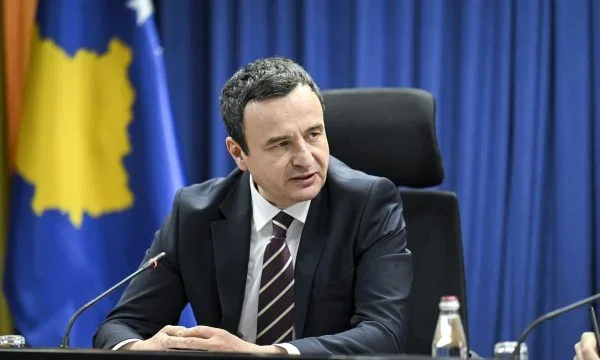
Kosovo’s Prime Minister, Albin Kurti, has said that imports have increased in Kosovo, as purchasing power has also risen, according to him.
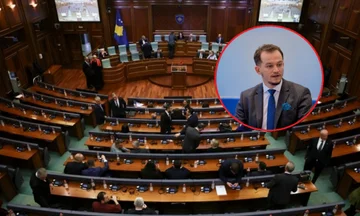
“The middle class in Kosovo has expanded. This expansion is due to several factors; one of them is the increase in wages, as well as the increase in employment, the increase in pensions, and allowances for mothers and children,” Kurti said at the Assembly session where the budget is being debated.
He said that the minimum wage had tripled and that wages in the public sector had also increased, but said he would have liked wages in the private sector to have risen more.
“From January to October, the rate of export growth was three times higher than that of imports. It is true that the import bill is increasing, but exports are growing much faster,” Kurti said.
Regarding Brezovica, he said that until three years ago it had been impossible to invest there, as it was controlled by Belgrade’s Inex.
But he said this was no longer an obstacle and that the right conditions had been created.
Regarding foreign direct investment, Kurti said it had doubled in Kosovo, but said the problem was the structure of where the investment was going.
“Investment is still going into real estate, apartments and land. But land that is not necessarily being cultivated.
As for migration both within Kosovo and abroad, he cited two main causes: the quality of education and justice.
He said citizens are forced to migrate from rural areas because of the poor quality of education, and migrate within the country or abroad.
“We can fix everything—the industry, defence, security, investment, culture, sport. But education remains a major challenge. In education, you have to sow this year and over the next two years in order to reap the harvest after 10–15 years. It is very slow; there needs to be a great deal of stability. And it faces challenges that the rest of the world faces too,” Kurti said.
He said he would have liked education to be managed centrally, but under the Ahtisaari proposal, education is the responsibility of the municipalities. He said this was because of the 10 Serb-majority municipalities.
He also said another problem was justice, with many citizens dissatisfied.
“We need to fix justice and education. I am optimistic about everything else, but I am cautiously optimistic about these two. This is our challenge in the years ahead,” Kurti said.
Referring to an analysis, Kurti said that since 2008, Serb-majority municipalities had received 50 percent more funding than the average budget of Kosovo’s municipalities.
He said that now “some people who are losing privileges see it as an injustice”.
“The fact that you have lost them is justice... Nobody wants to pay for electricity. When the north starts paying for it, it somehow seems like an injustice because you have been used to not paying for 20 years. The loss of privileges is presented as an injustice,” Kurti said.