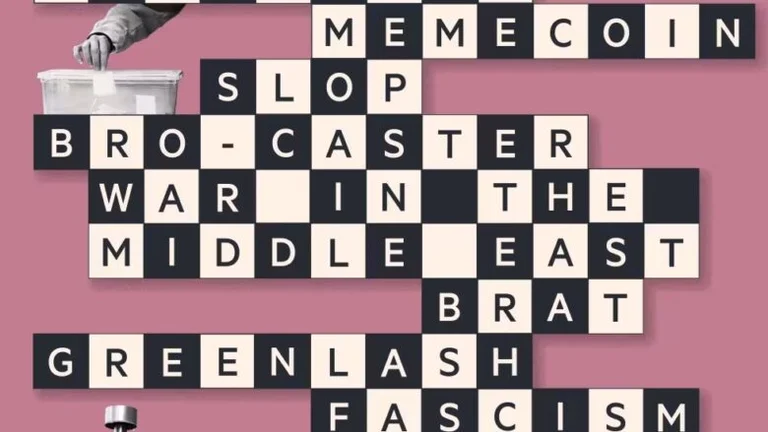
Prepared by: The Financial Times (articles from the section: Year in a Word)
By: Gideon Rachman
(fascism – noun) a political ideology – once thought dead – that appears to be experiencing a global revival
The 2024 US election was unusual because it involved a heated debate over whether one of the candidates was a fascist. General John Kelly, Trump’s former chief of staff during his first term, ignited the debate by saying his former boss matched a definition of fascism he had found in an online dictionary: “A far-right, authoritarian, ultranationalist political ideology … characterized by a dictatorial leader, centralized autocracy, militarism, the violent suppression of opposition, and a belief in a natural social hierarchy”.
Trump’s campaign responded to the accusation by saying Kelly had “made a fool of himself” and repeated false accusations. Some of Trump’s more sophisticated defenders argued that the accusation was misplaced because Trump is not a militarist. In fact, he campaigned as a pro-peace candidate, promising to end “forever wars.”
Kamala Harris’s campaign nevertheless seized on Kelly’s accusation. Democrats clearly believed Americans would surely reject any candidate tainted by fascism. But they may have overestimated the average voter’s historical knowledge. Reporters in the field said most voters associated fascism with Hitler – and Hitler with the Holocaust. Since nobody believed Trump planned to build an American Auschwitz, it was relatively easy for the Republican Party to dismiss the accusations of fascism as liberal hysteria.
Nevertheless, historians of the 1930s believe that Trump and some other world leaders – such as Vladimir Putin and Xi Jinping – are reviving aspects of the fascist tradition. Ultranationalism, the cult of the leader, and contempt for liberal values are coming back into fashion around the world – not just in America.

Competitiveness [Competitiveness]
(competitiveness – noun) a strong desire to be more successful than others; the quality of being as good as or better than others.
By: Henry Foy
Since 2000, Europe’s economic stagnation “has been seen as a concern, but not a catastrophe”, Mario Draghi wrote in a report on EU competitiveness published in September. No longer. The former president of the European Central Bank’s argument – set out over 393 pages – that the situation was truly catastrophic became a powerful wake-up call for change.
As Ursula von der Leyen began another five years at the helm of the European Commission, boosting competitiveness is the thread running through her key policy proposals. It is the buzzword on every European bureaucrat’s lips as they worry about the bloc’s uncertain future in a world of trade wars and races for dominance in artificial intelligence and green energy.
There are many metrics for measuring Europe’s stagnation. Disposable income per capita has grown almost twice as much in the US as in the EU since 2000. Only four of the world’s 50 largest technology companies are European. Investment levels lag behind those in the US.
Draghi offers solutions: increase investment by a staggering €800 billion a year; remove obstacles preventing European telecommunications or defence companies from competing globally; and compel the creation of a European single capital market.
Von der Leyen knows that – despite the claim that it leads the world’s largest single market – the national fragmentation that also afflicts the EU makes many obvious solutions more difficult.
A series of industrial policy proposals drawn up by her commission will land on EU leaders’ desks in the spring. They will all contain long-discussed ideas that have previously been rejected – this time with a new plea for change in the name of competitiveness.
“Do this, or there will be slow agony,” Draghi warned. Europe’s economic future may depend precisely on whether the currently bleak outlook convinces the bloc’s capitals that quick collective solutions are not only sensible, but essential.

Greenlash [Greenlash]
(greenlash – compound noun) a backlash against environmental policies
By: Pilita Clark
It seemed as if the era of green policies was shifting into high gear. If it wasn’t the US passing the biggest climate law in its history, it was the EU with legislation for the first major carbon border tax, or the UK promising to end sales of new petrol and diesel cars by 2030.
Progress on environmental policies was especially evident in Europe. By 2022, renewable energy production in the EU had grown so much that solar and wind overtook gas for the first time. EU carbon emissions fell by eight per cent in 2023 – the largest annual decline in decades, with the exception of 2020.
But as these climate pledges were becoming reality, inflation fuelled concerns about the cost of living. Populist parties, sceptical of “net zero” targets, exploited these concerns to denounce green policies as an expensive, elitist plot against ordinary people.
As 2023 gave way to 2024, the green march began to falter. Companies began backing away from their environmental targets. Germany softened a controversial law on heat pumps, which had helped push the far-right AfD party’s poll numbers above 20 per cent. Brussels abandoned a plan to halve pesticide use. In the European Parliament elections in June, green parties suffered heavy losses.
In the UK, the Conservative government postponed the ban on new petrol and diesel cars until 2035. This did not, however, save the Conservatives from a crushing election defeat to the Labour Party, which promised to restore the 2030 target and remained committed to an ambitious decarbonisation agenda.
This is a reminder that the backlash against environmental policies [greenlash] has its limits, as does China’s major progress towards dominance in green energy. But with an incoming Trump administration expected to roll back climate policies, and populism showing no signs of easing in Europe, it is clear that the fraught politics of the green transition remain unresolved.

Brat
(brat – noun and adjective) A cultural phenomenon inspired by Charli xcx’s music, implying an indifferent attitude and a hedonistic lifestyle
By: Srinidhi Balakrishnan
What connected this year’s race for the most powerful office in the world with a thrilling roadside stop near the UK’s M25 motorway? In 2024 – and perhaps only in 2024 – the two were closely intertwined, indelibly marked by brat.
A question for those over 25: What exactly is brat? First, it is the title of Charli xcx’s sixth album, nominated for a Grammy, released in June. But to limit the term to 15 tracks of synth sounds and pulsing bass that urge you to unleash your “365 party girl” would be an injustice.
According to the British pop star, it’s “a mood”. In a year when the US presidential election was based on vibes, it offered an unexpected glimmer of hope for Blue America: Charli’s emphatic endorsement of Kamala Harris with the tweet “kamala is brat” temporarily breathed life into the Democrats’ struggling campaign. The enthusiastic use of the album’s bright green cover and aggressive hyperpop sounds, combined with phrases that stick in 10-second videos on TikTok, promised to become a rallying cry for Generation Z. For a moment, it seemed as if Harris was in the middle of a brat summer, enjoying a few months of confidence and high energy. Unfortunately, in November, the vibe did not translate into votes.
The album’s extraordinary success and its accompanying aesthetic may herald the return of recession pop, the dance music of the first and second decades of the 21st century, characterised by unwavering optimism in the face of financial hardship (as Pitbull and Ne-Yo sang in 2014: “This is the last $20 I got, but tonight I’m gonna have a good time”). In the face of the cost-of-living crisis, the term is Generation Z’s cure for society’s ills.
Who cares about mounting student debt and a brutal job market when, according to the term brat, all you need to have fun is “a pack of cigarettes, a Bic lighter and a strappy white top”?

War in the Middle East [War in the Middle East]
(war – noun) armed conflict between countries or groups
By: Andrew England
In the Middle East, 2024 will be remembered as one of the most destructive years in modern history. Tens of thousands of people have been killed and millions forced to flee their homes. An unimaginable number of lives have been shattered.
The carnage began in late 2023, after Hamas’s October 7 attack on Israel, in which Palestinian militants killed about 1,200 people and took 250 hostages. Since then, the guns have rarely fallen silent.
Israel retaliated with a powerful offensive in Hamas-controlled Gaza, killing more than 44,000 people and turning the besieged territory into a wasteland.
After October 7, the militant movement Hezbollah began attacking Israel in solidarity with Hamas, opening a new front on the Israeli-Lebanese border. Iran-backed allied militants, including rebels from Yemen’s Houthi group and Shiite militias in Iraq and Syria, also launched rockets, shells and drones towards Israel. Meanwhile, Israeli forces and Jewish settlers intensified attacks and raids in the occupied West Bank.
As the conflict continued to escalate, Iran and Israel exchanged direct fire for the first time in April. They repeated the act in October, with greater intensity.
A month earlier, Israel had stepped up its offensive against Hezbollah. It killed leader Hassan Nasrallah, carried out airstrikes across Lebanon and invaded the country’s south. Prime Minister Benjamin Netanyahu boasted that he was changing “the balance of power in the region.”
A US-mediated ceasefire came into effect to end the Israel-Hezbollah war on November 27. But it did not silence the guns. Each side accused the other of violating the ceasefire, while Israel continued to bomb southern Lebanon.
Just hours after the ceasefire came into effect, another war erupted when a rebel offensive in Syria broke a years-long stalemate. In less than two weeks, dictator Bashar al-Assad was overthrown, bringing hope and joy – but also creating more uncertainty.

Bro-caster [Bro-caster]
(bro-caster – noun) an influencer with a podcast, usually male, who presents himself as both the enemy of and antidote to the liberal elite
Bryce Elder
“A bro-caster is the opposite of a broadcaster” is the kind of joke you might expect from a bro-caster. This counter-movement to woke culture embraces sexism in an old-fashioned way and is characterised more by arrogance than humour.
Joe Rogan, one of the world’s most famous podcasters, is the prototype bro-caster. His podcast, launched in 2009, defined the model. He has more than 14.5 million followers on Spotify. According to a YouGov survey of Britons, more than four-fifths of his listeners are men, and most are aged between 18 and 34.
Although Rogan’s political beliefs are difficult to categorise, he gives a platform to the voices of fringe scientists, political extremists and conspiracy theorists. Nobody gets an easy ride, with the host using the same brusque style with “flat Earth” theorists as with Donald Trump and Elon Musk. Part of Rogan’s mass appeal lies in the perception that if he gets annoyed with a guest, he could easily beat them up.
While Rogan’s support for men’s rights is measured, the bro-casters who followed his lead are more willing to stir up old grievances. Andrew Tate, a former kickboxer who describes himself as an “alpha male”, is the manosphere’s most notorious evangelist, with a toxic brand of misogyny that resonates in schoolyards.
In mainstream media, bro-casters can be seen as successors to shock-jocks such as Howard Stern. Generation X liked the irreverence and use of forbidden words because they came with ironic distance.
Then came a shift. The manufactured anarchy of radio talk was replaced by the manufactured authenticity of influencers. There is no hint of irony in Jordan Peterson’s psycho-babble, Steven Bartlett’s fist-bumping with chief executives, or former Marine Shawn Ryan’s masculinity. They all want to be taken seriously as seekers of truth, while being admired as caricatures of masculinity. Bro-casting is what happens when an audience wants answers but is tired of listening to experts.

Slop [Slop]
(noun) a vision of the brain drain in our artificially generated future
By: Elaine Moore
Weird images of a bright pink Jesus made of sea cucumbers may not have been what OpenAI had in mind when it warned that artificial intelligence (AI) could destroy civilisation. But this is what happens when new technologies are handed over to people and they are encouraged to create whatever they want. Two years after the generative AI revolution, we have entered the age of slop.
The spread of synthetic, low-quality content like Shrimp Jesus is often deliberate, designed to provoke or serve commercial purposes through bizarre prompts. In March, researchers from Stanford University and Georgetown found that the Facebook algorithm had, in fact, been “hijacked” by misleading content created by text-to-image models – such as DALL-E and Midjourney. One account on the X platform – Insane Facebook AI Slop – has documented these phenomena, including an image of Donald Trump – which became a favourite during the US election – heroically rescuing a kitten.
But slop can also be an unintended consequence of AI models being trained on AI-generated text themselves – a form of internal data drawdown that has attracted comparisons with the House of Habsburg, because of its unwanted effects.
Accelerationists will tell you this is just a bump in the road to more exciting user-generated content. A San Francisco startup, Fable Studio, has announced a Netflix-like streaming platform for AI-generated films. Meanwhile, Spotify chief executive Daniel Ek has said that people can now create “extraordinary amounts of content” on music services, as the cost of producing music is almost zero.
The question is whether quality controls will fall alongside the cost of creation. Note the phonetic similarity between slop and spam – another form of nonsense that is easily spread online.
Labels identifying AI-generated content could help combat this phenomenon. Over time, lower-quality content may disappear naturally, as it fails to attract attention. But if that does not happen, content created at zero cost and effort could ultimately destroy the exchange of information and trust online. Shrimp Jesus may only be the beginning.

Memecoin [Memecoin]
(noun) joke-based crypto- tokens with a surprisingly enduring appeal
By: Katie Martin
The anarchic current of markets is thriving in the world of memecoins – an “asset class” (if we can call it that) aimed at those who consider crypto’s Wild West not wild enough.
The biggest asset in the crypto world is Bitcoin [Bitcoin] – essentially, a string of code created by computers exchanging equations with each other. The wisdom of crowds has assigned it a value of nearly $100,000 per coin. Devout believers have made great fortunes here, despite the coin’s lack of everyday utility or supporting institutions and earnings. Its value doubled in 2024, thanks in no small part to Donald Trump’s curiosity about cryptocurrencies.
Enthusiasts insist that Bitcoin is the future of money and the foundation for a new financial order. But Bitcoin is just one crypto asset among thousands. Memecoin supporters make no such claims and openly embrace their absurdity, rooted in fleeting social media phenomena. In general, these cryptocurrencies are worth fractions of a cent per unit, but their total “value” sometimes reaches billions.
The best known is Dogecoin [Dogecoin], based on a famous internet dog and beloved by Elon Musk. It is no coincidence that Musk’s role in the Trump 2.0 administration is co-leading the Department of Government Efficiency – or Doge.
But things get much, much sillier. Memecoin newcomers in 2024 include Moo Deng [Moo Deng], based on a Thai hippo; PNUT – a tribute to an euthanised squirrel beloved by the American right; and Hawk Tuah [Hawk Tuah], launched by a young woman who became an internet sensation for an off-colour comment.
Buy early and, if others follow, you could make a lot. Buy late and you may quickly discover you are left with something worthless, as many buyers of the Hawk Tuah coin found. It is an open invitation to the financial establishment, and not for the cautious or faint-hearted.

Incumbent
(incumbent – adjective and noun) the current holder of an office or position
By: John Burn-Murdoch
For more than a century, one of the most fundamental concepts in political science has been that of the incumbency advantage. You could call it “electoral gravity@, a force that pulls everything towards the person or party running things. There are many reasons: being in power brings benefits, such as name recognition, established fundraising networks, media relationships and results.
But it is no longer clear whether this still holds true. Many of the things that once offered an advantage at the ballot box can now produce a backlash. In 2024, when more than half the world’s population was eligible to vote in elections, incumbents were ousted from power – from the US to the UK and beyond.
When the long-term trend in the democratic world was steady economic growth and progress in a broader sense, succeeding in office was a good thing. In the absence of a serious economic shock or a major mistake, parties could run successful campaigns based on the tangible improvements they had delivered during their term.
With stagnation now the norm, this has been turned on its head. “Vote for us if you want another four years of frozen living standards and other things getting worse@” is not a slogan that easily wins votes.
Similarly, in an increasingly fragmented media landscape, where new politicians can speak directly to voters, being well known to major news organisations is no longer much of an advantage. If Elon Musk realises his vision, incumbents’ fundraising advantage could also quickly become a thing of the past.
If this trend continues, it has grim implications for centrists, balanced rhetoric and small but steady policy successes. It seems we have entered a new era in which all candidates, whether incumbents or outsiders, have a strong incentive to run as new populists, promising quick wins and radical reforms.

Tariff
(tariff – noun) a tax on imported goods
By: Alan Beattie
We trade old-timers spent years telling people that trade policy was no longer about tariffs. Tariffs around the world were low and falling, we said. Trade barriers today are about complex technical regulations, we said. And then came the so-called “Tariff Man”, Donald Trump, to take trade policy back to a simpler and more brutal era.
When Trump calls “tariff” the most beautiful word in the English language – “it’s more beautiful than love, it’s more beautiful than anything” – he surely isn’t thinking of its romantically meandering etymology. It came to us from a term originally used by Arab merchants to mean a notification or an inventory, via a blend of Persian, Turkish, Italian and French – a rich interplay of medieval Mediterranean trade embodied in a single word.
But the incoming US president thinks trade is how foreigners in general, and China in particular, steal from the US, and tariffs are how he can stop them. He mistakenly believes they are paid by foreign companies: tariff revenues are actually paid to tax authorities by importers – and, as the tariffs he imposed during his first term showed, domestic companies and consumers usually end up absorbing the cost.
For Trump, however, they are a universal balm, not only a means of reducing trade deficits, but also a source of tax revenue and an instrument of geopolitical influence. They certainly attract attention: his threat to impose 25 per cent tariffs on imports from Canada and Mexico unless they addressed illegal immigration and fentanyl trafficking prompted their leaders to rush to show they were taking the situation seriously.
Most economists hate tariffs, considering them distortionary and damaging. Most governments have moved away from using them on a large scale. Trump’s obsession with tariffs is, in fact, a case of dusting off a weapon from a bygone era. We will spend four years learning how an old rifle performs in a modern trade war. /Telegrafi/