Source: The Daily Telegraph
The lightning-fast offensive by Syrian rebels, which led to the capture of Syria’s second-largest city, Aleppo, is a classic example of how the law of unintended consequences can trigger dramatic changes on the global stage.
With so much turmoil in the Middle East, the protracted civil war in Syria, which began in 2011, has become a sideshow. This is despite the fact that Syrian dictator Bashar al-Assad has been accused of war crimes for his role in the deaths of around 500,000 people during the conflict and for forcing half of the country’s population of 25 million to flee their homes.
While Syria is occasionally mentioned in the broader context of Israel’s harsh military campaign against Iran-backed terrorist groups in Gaza and Lebanon, this usually happens as a result of collateral damage. One example is Israel’s bombing—in April—of the Iranian Consulate in Damascus, which operated as a hub for planning terrorist operations.
As for the Assad regime, the main concern has been avoiding involvement in Israel’s military campaign against Hezbollah in southern Lebanon. This is a difficult task, given that most of the terrorist group’s weapons are transported from Iran via Damascus airport.
Assad’s desperate effort to avoid direct military conflict with Israel has led his regime to hesitate to respond, even when Israeli fighter jets have attacked targets on Syrian territory. Assad’s insistence on staying neutral in Israel’s war with Hezbollah led the Biden administration to seriously consider restoring relations with the regime, in exchange for ending its longstanding alliance with Iran.
Following the Syrian opposition’s surprise capture of Aleppo, as well as other areas in northern Syria, these diplomatic considerations will be pushed into the background. This development has plunged the Assad regime back into crisis.
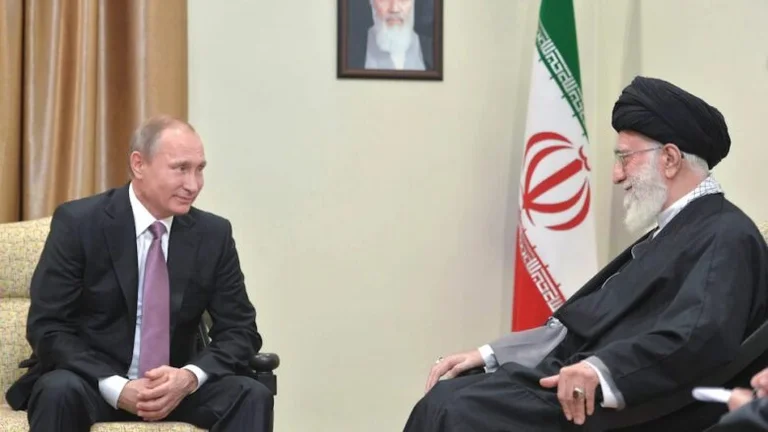
About a decade ago, when the Syrian dictator last faced a real prospect of being overthrown, his regime was saved by support from its allies in Tehran and Moscow. Iran considered keeping Assad in power vital to continuing its efforts to spread the influence of terrorism across the Arab world. Meanwhile, the Kremlin, whose close ties with Damascus date back to the Soviet era, was interested in retaining its bases in Syria, particularly the naval facility in Tartus—the Russian Navy’s only operational base in the Mediterranean.
Russian President Vladimir Putin’s decision, at Iran’s request, to intervene militarily in Syria helped turn the tide of the conflict in Assad’s favor. Russian bombers destroyed rebel bases in cities such as Aleppo, while Iranian forces, including Hezbollah from neighboring Lebanon, led the ground offensive.
Unfortunately for Assad, these allies are unlikely to save his regime again to the same extent, particularly because of changes in the global geopolitical landscape over the past year. The heavy losses suffered by the Russian army in Ukraine since Putin’s invasion in February 2022 mean that Moscow is unable to divert valuable resources to keep Assad in power. Russia’s military presence in Syria has been significantly reduced compared with its 2015 level, as troops have been deployed to the Ukrainian front.
Iran, too, is under great pressure after the heavy losses Hamas and Hezbollah have suffered in Gaza and Lebanon. While Tehran has promised support for Assad, finding the means to provide it is problematic, given Hezbollah’s losses in recent months.
The weakened positions of Iran and Russia undoubtedly influenced the timing of the rebels’ decision to launch their attack on Aleppo. They knew that without support from Tehran and Moscow, Assad’s forces would struggle to defend themselves.
The maneuvers of Turkish President Recep Tayyip Erdoğan, who pursues an Islamist agenda to restore the glory of the Ottoman Empire, are another important consideration in the unfolding drama in northern Syria. Erdoğan is a fierce opponent of the US-backed Kurdish enclave established on the Syrian border as a result of the campaign to destroy the so-called Islamic State caliphate. By supporting the rebels, he aims to prevent the creation of a Kurdish state while also exerting pressure on Assad’s secular regime.
How this highly complex geopolitical puzzle unfolds depends both on the rebels’ own agenda, including their territorial ambitions, and on Assad and his allies’ ability to avert collapse.
Assad’s downfall would undoubtedly constitute a strategic catastrophe for Russia and Iran. For Putin, the loss of military bases in Syria would add to the humiliations from Ukraine, while for Iran, the loss of its terrorist allies in Gaza and Lebanon would compound its difficulties.
Russia and Iran will desperately hope to save Assad. Failure to do so would have profound consequences not only for the Syrian dictator, but also for the autocratic regimes in Moscow and Tehran. /Telegrafi/