By: Samuel Ramani / The Daily Telegraph
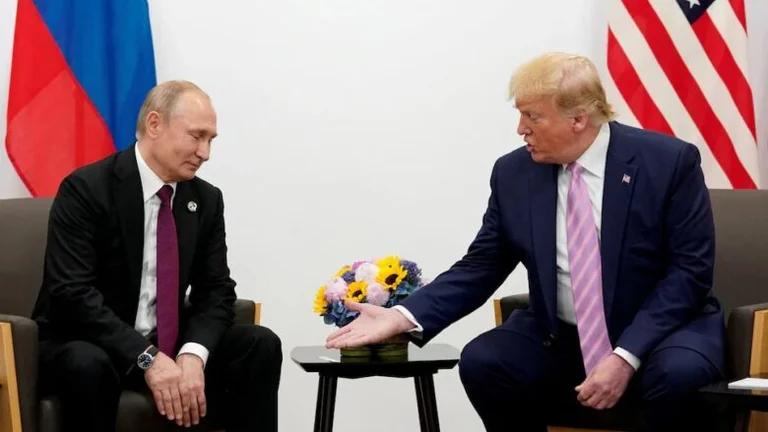
Russian President Vladimir Putin has quietly expressed his willingness to discuss a ceasefire agreement for Ukraine with US President-elect Donald Trump. Putin’s alleged position was revealed to Reuters by five Kremlin insiders and gave a boost to Trump’s plans to freeze the war in Ukraine at the start of his presidency.
These are promising signs for Trump’s agenda, but is Russia ready to negotiate? The Kremlin’s rhetoric suggests that the answer to this question is a resounding “no”. On Wednesday, Kremlin spokesperson Dmitry Peskov stated that Putin “has repeatedly said that any option for freezing the conflict does not work for us”.
Russia also rejected Turkey’s proposed peace plan for Ukraine. The proposal included freezing the current battle lines, keeping Ukraine out of NATO for at least ten years, and deploying international troops along a demilitarized border line in eastern Ukraine. These terms are similar to the peace plan Trump is expected to present to Putin.
Unless the US accepts Putin’s maximalist vision, which includes taking over Ukrainian-controlled areas in Zaporizhzhia, Kherson and Donetsk, as well as permanently excluding Ukraine from NATO membership, the chances of Russia changing its short-term approach to negotiations are slim.
It is just as unlikely that Trump will accept Putin’s extreme demands. Even the peace plans proposed by China and Brazil, which are more favorable to Russia, do not go beyond freezing the conflict along the current borders. Abandoning NATO’s open-door policy under Russian pressure would seriously damage the alliance’s long-term credibility.
Although Russia is unlikely to negotiate in good faith, it still sees tactical value in diplomacy. Just as Russian warplanes and Wagner Group mercenaries helped Syrian President Bashar al-Assad retake Aleppo by force, Russia actively participated in the Astana Peace Process. While Russian forces carried out the Bucha massacre, Putin’s top diplomats were toying with the idea of ending the war in Ukraine during the Istanbul talks in March 2022.
Putin’s phone call with German Chancellor Olaf Scholz and his willingness to discuss a ceasefire with Trump are the latest signs of this game. For the Kremlin, diplomacy is a tool of psychological warfare and a delaying tactic that facilitates military advances.
When negotiations begin, Russia will almost certainly cite Ukraine’s use of long-range ATACMS missiles on its territory and the occupation of Kursk as obstacles. Russia wants Ukraine to make unilateral concessions on both fronts.
To stop Ukraine’s ATACMS attacks, Russia could exploit the pride of Trump and his inner circle. While National Security Adviser Mike Waltz has highlighted the escalation risks associated with Ukraine’s use of ATACMS missiles, and Trump regularly warns about World War III, Russia will heighten tensions with nuclear threats.
Prominent Russian commentators, such as former Kremlin adviser Sergey Markov, claim that Biden approved Ukraine’s use of ATACMS missiles to sabotage Trump’s presidency. Russian diplomats will use this narrative in negotiations to reinforce the president-elect’s distrust of the US foreign policy establishment.
As for Kursk, Russia will find it harder to achieve its preferred outcome. Ukraine is determined to hold on to territory in Kursk, as it aims for a territorial exchange deal involving parts of Kharkiv occupied by Russia or the Zaporizhzhia nuclear power plant. Russia will likely continue its drawn-out war in Kursk while negotiations are underway.
Even if these issues are resolved, Russian obstructionism is likely to continue. Putin sees continuing the war as essential to his regime’s stability. The military-industrial boom continues to prevent socio-economic unrest. Led by fascist philosopher Alexander Dugin, many Russian ultranationalists consider the approval of the Minsk II Agreements in 2015 to have been a naive act of betrayal.
By authorizing a full-scale invasion of Ukraine in February 2022, Putin made a fateful deal with Russian ultranationalists. The Wagner Group’s rebellion in June 2023 underscored the threat posed by their discontent, and Putin sees continuing the war as the ideal way to placate this militarized faction.
The most effective way to change Putin’s calculations is to increase the cost of Russian aggression. Harsher sanctions could eventually burst Russia’s wartime economic bubble and degrade its military supply chains. Ukraine’s long-range strikes could disrupt Russian energy production and prevent more North Korean forces from reaching the front lines. Faced with a declining economy and poor battlefield results, Putin may be forced to negotiate seriously.
Russia is determined to outlast Western support for Ukraine and sees diplomacy as a tactic for achieving this goal. When negotiating with Putin, Trump must be aware of this reality. /Telegrafi/