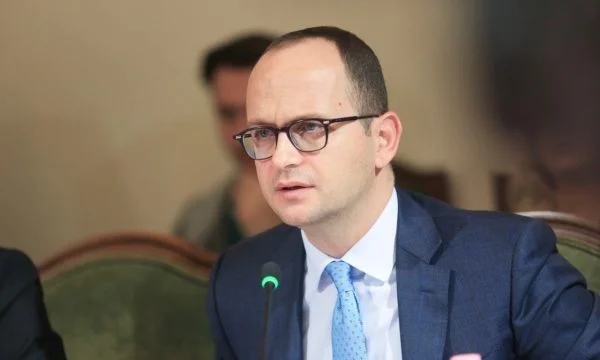
By: Ditmir Bushati
Many have tried to analyze the results of the U.S. elections in black and white, although it is still too early to fully understand the scale of this world-shaping event. The analysis of why people choose one person over another has long since become an art rather than a science, especially in an era of fierce confrontation between traditional media and social networks. For Americans, there are several important factors that influence the outcome and merit deeper analysis, starting with prejudices over whether a woman can be elected president; whether the “Trump phenomenon” is an exception to the political rule or a “bitter medicine” for the hypocrisy and erosion of the liberal elite, detached from the concerns of ordinary people; the relationship between politics and representation, money, and the techno-feudal lords of the information world; and the fact that perceptions of reality are more powerful than reality itself, as long as algorithms steer political debate across various social platforms.
Donald Trump returned to the White House, reinforcing the trend observed around the world this election year, where people have embraced change. Meanwhile, Republicans will control majorities in Congress and the Senate, alongside the conservative majority of judges on the Supreme Court. For at least two years, President Trump can do almost anything he wants, unimpeded by the other branches of government. Appointments to key posts show that Trump sees this electoral triumph as confirmation of his worldview: that populism on social issues, creating jobs, securing borders, ending wars, and trade and foreign policy under the “America First” motto are the way forward for the country and reflect the wishes of the majority of the American people.
Internationally, a cloud of confusion has formed around the possible impact of the Trump administration in different parts of the world. A fundamental shift is expected from it compared with the Biden administration, but also with Trump’s own first administration, due to: the two major fronts of war, Russia-Ukraine and the Middle East; the absence of strong leadership at the European level, following the crushing defeats of the governing elites in Germany and France; the formation of alternative alliances among states with significant geography and populations, as opposed to the rules-based order; and a more complex and competitive international architecture.
The cloud of confusion is considerable as to how relations between Americans and Europeans will develop within the Euro-Atlantic space. A certain shift in U.S. strategic priorities from Europe toward Asia and the Pacific began under President Obama’s administration. The first Trump administration’s brutal response to Europeans to meet their obligations arising from NATO membership stemmed from the fact that, for some Europeans, beginning with French President Macron, NATO had lost its purpose. However, the insistence of the United States at the time not only “shook” NATO out of its slumber, but also prepared it to respond to Russia’s aggression in Ukraine.
The Biden administration secured a stable link between the United States and Europe for confronting Russian aggression in Ukraine. Biden will be the last Euro-Atlantic president in the White House with a worldview shaped since the Cold War, aware of the need to coordinate foreign policy and actions with European allies. Meanwhile, as he also demonstrated during his first presidency, President-elect Trump’s approach to engagement with allies and the world is different. More than other countries’ domestic political systems, or alliances based on shared values in multilateral institutions, he is interested in reaching agreements, regardless of a state’s orientation, trusting in U.S. power in defense, the economy, natural resources, and technology.
This will constitute the fundamental challenge for European allies, who, since the end of the Second World War and then the fall of the Berlin Wall, have considered their relationship with the United States to be based on shared values and interests, with a focus on commitment to collective security, the rule of law, fundamental freedoms and human rights, and a transparent, multilateral free-trade system.
Precisely because of this approach, the incoming Trump administration also represents an opportunity to create a broader network of nontraditional allies, starting with the monarchies of the Persian Gulf, as well as direct engagement with longstanding adversaries such as Russia or North Korea, in order to deter or end conflicts and wars. The Persian Gulf countries and Israel were the first places Trump traveled to as president during his first term, and where he secured the greatest diplomatic progress through the Abraham Accords, which remain in force despite the bloody wars in Gaza and Lebanon. It would not be surprising if President Trump made his first trip there again. This time, with an effort to expand the Abraham Accords and further isolate Iran, with the aim of creating a stable security architecture in the Middle East.
President-elect Trump has repeatedly said he will end Russia’s war in Ukraine within a day, although the dynamics on the ground are changing because of President Biden’s decision to allow Ukraine to strike back at Russia with U.S. long-range missiles. Although ending the war is an objective everyone desires, the prospect of lasting peace or a ceasefire is slim. It therefore remains to be seen how this objective will materialize, what steps will be taken, and whether or not they will be coordinated with European allies. And, above all, what the future holds for Ukraine. Viewed through the prism and range of frozen conflicts in Europe, the way this war ends will inevitably affect Europe’s security architecture, including our region. As the EU’s designated foreign policy representative, Kaja Kallas, rightly said, “Russia’s defeat in its war in Ukraine is the surest way to avoid worrying about World War III.”
If the Trump administration’s actions on Ukraine are not coordinated with European allies, this will serve as a test for Europeans to demonstrate their capacity to stand and act together, regardless of the United States, whose presence they have grown accustomed to over many decades. So far, the European response to Ukraine has been unified, principled, and strategic, beyond all expectations. The EU and its member states have provided around 43 billion euros in military aid, reinvented the European Peace Facility, and welcomed around four million Ukrainian refugees. Politically, the EU took steps toward its eastward enlargement by granting candidate-country status and deciding to begin accession talks with Ukraine and Moldova. None of this could even have been imagined before February 24, 2022.
For Poles, Balts, and Nordics, Ukraine is a major security issue. Finland and Sweden abandoned their neutrality policies and joined NATO precisely because of the Russian threat. Nevertheless, a number of European countries far from the war’s front line are paying significant economic costs as a result of the war. Hungarian Prime Minister Orban insists on ending the war and normalizing relations with Russia. In such circumstances, the question arises: will Europeans stand united in the face of possible unilateral actions by the Trump administration? Unilateral actions, accompanied by increases in U.S. tariffs on European goods, as President-elect Trump promised during the campaign, could cause major geopolitical rifts within the Euro-Atlantic family, affecting the entire continent, or lead to a broader European realignment.
The current European order has rested on three pillars that have been dramatically challenged: easing the distinction between Europe and the United States through the creation of the Euro-Atlantic community; easing the distinction between domestic and foreign affairs through the policy of deepening the EU; and easing the distinction between center and periphery through the policy of enlargement and neighborhood relations. The EU needs to repair these pillars, only one of which concerns Europe’s cooperation with the United States. The other two depend entirely on the will of the EU member states.
Although Europeans have increased their commitment to NATO, the security of the continent depends to a considerable extent on U.S. support. European foreign policy is closely tied to that of the United States, whether regarding the Middle East or China. Europe has fallen behind the United States and China technologically and has not sufficiently diversified its economic partnerships. It relies primarily on trade relations with the United States. Recently, it has reduced its energy dependence on Russia. In other words, the EU remains vulnerable to trade wars and a new multipolar security order.
Moreover, today’s EU is not only more exposed geopolitically, but also more politically divided in terms of the model it represents, the need for reform, how it functions and makes decisions, and competing agendas concerning the enlargement process and consolidation of the European project to its south and east.
At the meeting of the European Political Community held in Budapest, after the U.S. elections, Hungarian Prime Minister Orban viewed his privileged relationship with Trump as an opportunity for the EU to advance its interests, end the war on the continent, and normalize relations with Russia. What the conditions for ending the war are, and what normalizing relations with Russia means, remains unclear. At the height of OSCE-ODIHR criticism of parliamentary election standards in Georgia, Prime Minister Orban visited Tbilisi and praised the process, provoking a wave of criticism from most EU member states.
Likewise, Hungary has expanded its economic presence in our region and its political patronage, building preferential relations with Serbia, North Macedonia, and Republika Srpska, as well as contingent relations with Albania. Although it was among the first states to recognize Kosovo’s independence, its oppositional positions in recent years toward Kosovo’s aspirations to join international organizations are evidence that EU policy toward Kosovo is now a policy of 21 recognizing states, minus five non-recognizing states, with Hungary’s own policy further paralyzing a common European position and action to resolve the conflict between Serbia and Kosovo and secure their accession to the EU.
Meanwhile, French President Macron’s repeated call to reduce dependence on the United States, and efforts to shift from the EU toward the European Political Community, do not align with political reality or the aspirations of a large part of Europe’s population. An intergovernmental format with a diverse political geography, but no decision-making powers or instruments, the European Political Community cannot replace either the necessary U.S. presence in Europe or the transformative process of EU membership.
The present moment is decisive for major changes in the European integration project. Clarity will follow confusion, creating an opportunity to understand the direction in which the continent is moving, forward or in the wrong direction. Naturally, weakening the Euro-Atlantic bond is not a good omen for our region, where the United States is regarded as the guarantor of the security perimeter, while Europeans are “allergic” to force. In any case, this means a need for increased European vigilance, to strengthen the deterrent capacity of KFOR troops in Kosovo and EUFOR in Bosnia and Herzegovina, as two critical points in the field of regional security.
The EU’s pursuit of a geopolitics without values, as a “sedative” in the absence of a process for the region’s states to join, has weakened citizens’ trust in the EU. Although the EU has played a leading role in the region, in terms of the values and standards it embodies, the enlargement process has not translated into more democracy, democratic standards, or prosperity for the region’s citizens.
President-elect Trump’s pledge to deport undocumented migrants from the United States reflects a trend within the EU which, in the absence of a unified policy, has allowed member states to move increasingly away from respecting international law, as seen in the agreement between Italy and Albania to establish “migrant return centers” in Albania. The same can be said of the agreement between Germany and Serbia concerning lithium, which creates the impression that critical raw materials and migration are priorities for the EU in pursuit of its strategic objectives, unfortunately at the expense of democracy and the rule of law in the Western Balkans.
The examples above show how the EU could become “Balkanized” or “reformatted” as a result of compromising the values and standards of the enlargement process, especially during the last decade. They undermine its capacity to present itself as a united front in the Western Balkans, making citizens feel not like part of the European family, but like its periphery, serving to solve Europe’s “problems.”
If the first Trump administration shook NATO out of its slumber, Donald Trump’s return to the White House should serve as an impetus to clarify the EU’s common goals and the future of the European project. “The hour of Europe has come,” Luxembourg’s Foreign Minister Jacques Poos proudly declared in 1991, as he led, on behalf of the EU, efforts to find a solution to the conflict that had just erupted in the former Yugoslavia. In reality, the solution came from the United States, whose determination halted the wars and secured peace. Although around a quarter of a century has passed since the end of the wars in the region, the EU has not demonstrated the capacity to resolve the conflicts and anchor all the region’s states within its fold. In the new geopolitical circumstances, the EU is once again being called upon to rise to the challenge and meet the demands of the times. /Published by the “Friedrich Ebert” Foundation/