By: Samuel Ramani / The Daily Telegraph
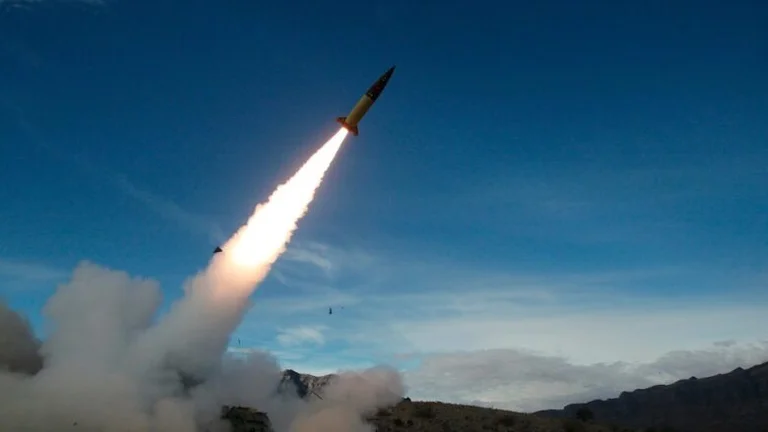
Ukraine’s wait for permission to use long-range American ATACMS missiles on Russian territory has finally come to an end. President Joe Biden has approved Ukraine’s use of ATACMS missiles against targets in the Kursk region, where Russian and North Korean forces are trying to dislodge Ukrainian forces from their fortified positions.
Biden’s decision represents a historic diplomatic triumph for Ukraine. At the Yalta European Strategy Conference on September 13, Ukrainian President Volodymyr Zelensky argued that deliveries of ATACMS missiles were useless if they could not be used against Russian targets. Zelensky used this logic in a personal appeal to Biden at the White House later that month, but left Washington empty-handed. The fear of Donald Trump’s return as president and his threat to halt U.S. aid to Ukraine ultimately pushed Biden toward decisive action.
Ukraine’s use of ATACMS missiles in Kursk is expected to bring immediate benefits to its increasingly difficult frontline position. Russia’s deployment of 10,000 North Korean troops to the Kursk region is widely seen as an asymmetric retaliation against Ukraine for obtaining permission to use NATO weapons against Russian targets. Challenging Russia by expanding Ukraine’s use of ATACMS missiles could deter President Vladimir Putin from recruiting additional contingents of North Korean troops in 2025. It could also allow Ukraine to strike Kursk’s Vostochny Airport more often, a military facility reportedly home to MiG-29 aircraft and Pantsir-S1 air defense systems.
The real significance of Biden’s decision depends on the flexibility the U.S. affords Ukrainian forces. Since Ukraine has already used shorter-range HIMARS missiles in strikes across the border near Kharkiv, the U.S. could approve the use of ATACMS missiles for similar purposes. This would make Russia’s efforts to achieve a military breakthrough toward Kupiansk even more difficult.
It is not yet clear whether the U.S. will allow Ukraine to use ATACMS missiles against Russian targets farther from the front lines. While Russia has preemptively moved 90 percent of the aircraft it uses to launch glide-bomb attacks out of ATACMS range, 17 air bases and at least 250 major military facilities remain within their range.
If Biden’s decision prompts British Prime Minister Keir Starmer to ease restrictions on the use of Storm Shadow missiles, these facilities will become even more vulnerable. Ukraine’s suspected drone attack on a Russian factory in Izhevsk on Sunday, located 1,300 kilometers from its border, disrupted Russia’s drone and air defense production chains. Securing broader permissions to use ATACMS and Storm Shadow missiles would strengthen Ukraine’s technological gains.
As Trump’s inauguration approaches, the U.S. is finally fully mobilizing to support Ukraine’s victory. A promising turn, but it may be too little, too late for Ukraine./Telegrafi/