The director of the National Institution Historical Museum – Kruševo, Miha Oxhaklieski, today submitted his irrevocable resignation, emphasizing that the decision is a personal, moral and ethical act, as well as an expression of responsibility toward the institution and the public.
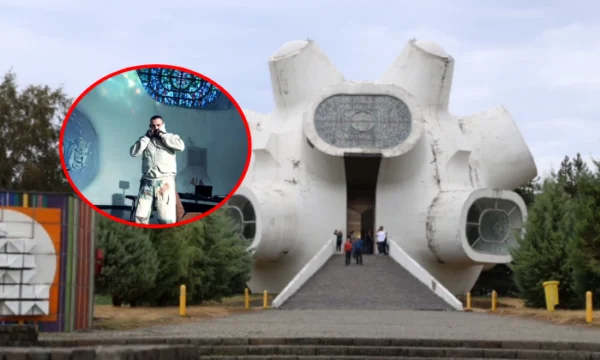
Oxhaklieski’s resignation comes after public reactions regarding the filming of the music video “Sexy Mama” by Kosovar rapper Don Xhoni inside the “Makedonium” monument in Kruševo, which is the state’s protected cultural heritage.
In his resignation, Oxhaklieski emphasizes that in this particular case no law, regulation or other act was violated, nor was any decision adopted by the institution’s Management Board contravened, Rtv21 writes. According to him, this was a procedure that formed part of an established practice previously implemented at the institution.
Nevertheless, as he points out, leading a public institution entails responsibilities that are not limited to compliance with legal norms, but also require high moral and ethical standards, especially when public trust is at stake.
“Although there was no intention to violate the law, regulation or any decision, there was an unintentional lapse in assessing how a particular procedure might be understood by the public. I feel a moral responsibility for this, and for that reason I am submitting my resignation,” Oxhaklieski’s resignation letter states.
He also apologized to the public for the confusion created and for the unintentional lapse, emphasizing that his apology is an expression of respect for the citizens and the institution he served.
“The National Historical Museum – Kruševo is an institution of particular importance to our cultural and historical memory. Its reputation and the public’s trust are greater than any position and any individual who holds that position for a certain period,” the resignation letter states.
Oxhaklieski emphasizes that he is submitting his resignation with a clear conscience regarding his legal responsibility, but with full awareness of the moral responsibility carried by the position of director of a public institution.
With this act, as he points out, he gives priority to the institution’s reputation and interests over personally remaining in office.