The conviction of Duane “Keffe D” Davis in Las Vegas has brought an end to one of the world’s most famous unsolved murder cases.
“We’re talking about the greatest rapper of all time, an icon, and for 30 years there were no arrests or prosecutions,” former prosecutor Neama Rahmani told the BBC about the conviction for the murder of rapper Tupac Shakur. “This is a big deal. It was a difficult case. It’s an old, unsolved case.”
This brings a 30-year mystery to an end, marking the end of an era, he added.
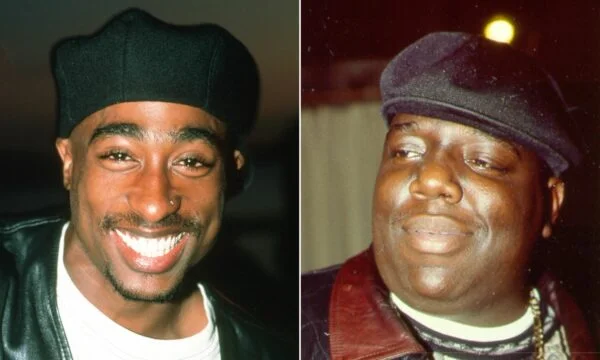
It brought tears to the eyes of rapper Shakur’s family members in the courtroom, promises from Davis that he would appeal, and curiosity among some of the others following the case about what this could mean for an almost identical case – the unsolved murder of The Notorious B.I.G., or Biggie Smalls, also known by his legal name, Christopher Wallace.
Wallace, from New York, was Shakur’s great rival, and the two rappers embodied the East Coast–West Coast rivalry that dominated hip-hop in the 1990s. Wallace was killed in Los Angeles a few months after Shakur, in similar circumstances – in a drive-by shooting. No one has ever been charged.
The two murders have long been believed to be connected, and Wallace’s name came up repeatedly during Duane Davis’s trial – he and Davis were at the same party on the night Wallace was killed, and Davis was interviewed by police about the case. The investigator who conducted that interview even testified at the trial for Tupac’s murder.
The breakthrough that finally led to Shakur’s case being solved came largely from one thing – Davis’s own words.
Through documentaries with the media, his memoirs, podcasts, and even a secret interview with police – he admitted his role in Shakur’s death. Davis said he threw a firearm into the back seat and that his nephew, Orlando Anderson, used it to shoot Shakur dead as they pulled up alongside his vehicle in Las Vegas on September 7, 1996.
Anderson was shot dead in 1998, after denying that he had killed Shakur.
At trial, there were no eyewitnesses to place Davis in the vehicle, no murder weapon was presented, and there was no video or photographic evidence. His defense team went so far as to argue that there was no evidence he had even been in Las Vegas that night.
Rahmani said it was a difficult case to prosecute. He noted that rumors and speculation about Davis were nothing new and had circulated for decades – but the decision to charge him and take the case to trial was an “uphill climb” – a bold move – for prosecutors.
“Look, when you’re a prosecutor, you’re expected to win every time. They made a difficult decision to bring charges in a case many people thought could be a lost cause,” he explained. “And they delivered justice, when others didn’t even try.”
Davis’s attorney, Michael Sanft, asked the jury to consider, “What facts do you have?” Before the jury delivered its guilty verdict, he urged them to regard his client as a liar who had told stories to sell books and make money.
“There is no evidence,” he argued to the jury.
When the guilty verdict was read in the courtroom, Shakur’s family members were overcome with emotion. Some cried and wiped away their tears with tissues. Others embraced and held hands – one family member even hugged one of the prosecutors in the case.
Trial attorney Shaun Kent said the case really evolved with every interview and every moment when Davis decided to open his mouth and say more about it.
“There are no other witnesses besides him,” Kent told the BBC before the trial, noting that “the strongest witness against him is himself.”
Rahmani said that, in his view, Davis would “go down in history as one of the dumbest criminals in the world,” who most likely would never have faced charges if he had kept quiet.
“He really couldn’t stop himself,” Rahmani added. “Even when he was arrested and in custody, he gave interviews.”
Much of the trial over Shakur forced the jury to look back to the 1990s, a time when intense gang violence had permeated hip-hop music and the rivalries between East Coast and West Coast rappers.
It was a time of deep distrust of the police and a street code that forbade informing on others to the authorities.
Even Shakur, after being shot several times in the drive-by attack that would later kill him, refused to speak to the authorities. “We’ll take care of this,” he said in the ambulance, as an officer tried to ask him who had done it.
The silence was repeated a few months later in the shooting of Biggie Smalls.
Biggie, one of the biggest East Coast rappers, was leaving a party after the Soul Train Music Awards ceremony in Los Angeles when a black Chevrolet pulled up beside his vehicle at a traffic light and opened fire on March 9, 1997. This happened almost exactly six months after the shooting that claimed the life of Shakur, one of the biggest West Coast rappers.
Both were Grammy-nominated artists at the top of their genre, earning millions and receiving constant radio airplay. They were also at the center of an East Coast–West Coast rap rivalry, which was reflected in their lyrics and also led to threats and physical violence.
Neither murder led to arrests or convictions, only rumors and conspiracy theories, and gang violence that erupted on the streets of Los Angeles as street gangs sought to hold one another responsible after the deaths of both rappers.
As with Shakur’s death, countless theories and names have surrounded Biggie’s death in Los Angeles, but the Los Angeles Police Department (LAPD) has made no arrests.
“It’s really a stain on the LAPD. The fact that this could happen and there were no arrests and no one was prosecuted,” Rahmani said, noting that Biggie’s murder took place on a public street in the middle of the second-most populous city in the US.
“Prosecutors don’t like to lose and tend to be a little afraid to take the risk,” Rahmani explained. “But perhaps this [the Tupac conviction] will encourage people in Los Angeles to take another look at an old, unsolved case that is nearing 30 years.”
Asked about the cases and whether the conviction for Tupac’s murder could revive the investigation into Biggie’s death, the LAPD told the BBC it was aware of the conviction and that the investigation into Biggie’s case remains active.
“The murder of Christopher Wallace remains an open and unsolved case within the LAPD’s Robbery-Homicide Division,” Lieutenant Elpidio Orozco said, urging anyone with information to contact the authorities.