By Adri Nurellari
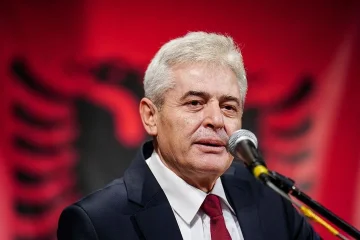
The Open Balkan is rising again like Lazarus; after being declared politically spent and disappearing from regional conferences and everyday rhetoric, it is now returning to us in a new suit – in German, in the pages of Frankfurter Allgemeine Zeitung. In a joint article, Albanian Prime Minister Edi Rama and Serbian President Aleksandar Vučić call for a new version of European Union enlargement that calls for functional integration before full membership. In their view, if the EU door is slow and narrow, then let the window of the common market, Schengen, and gradual institutional harmonization be opened without waiting for full membership in the European Union.
Presented as a “realistic” way to overcome the stagnation in enlargement, the idea is simple in essence: since the EU is “tired” of enlargement, let it offer a “shortcut” through transitional functional integration that opens markets, facilitates movement, increases interdependence and economic integration, with the idea that political integration will come later. According to them, the Balkans cannot wait indefinitely for an EU whose priorities have been displaced by the war in Ukraine and the Middle East, mass migration, the energy crisis, or internal tensions.
At first glance, this proposal sounds like reasonable pragmatism, but once stripped of diplomatic rhetoric and placed in the current context of developments within these two countries, as well as the perspective of Kosovo-Serbia relations, this proposal is not merely something technical, but an attempt at a radical reconfiguration of the Balkans, with incalculable costs for the future of Albanians in particular and the entire region in general.
First and foremost, this proposal in itself represents an attempt to offer partial integration as an alternative to the radical transformation required by the accession process. In this way, they have deliberately overlooked the essential fact that integration has never been solely a matter of a common market, but above all a normative project in which the foremost goals are achieving a functioning democracy, full enforcement of the law, and respect for the highest standards of human and minority rights. Both leaders’ governments are today classified as “hybrid democracies,” where institutions are captured and democratic space is regressing, and naturally this proposal sounds like a perfect alibi for gaining access to European funds and markets without submitting to the scrutiny of transparency and accountability required by full membership. This proposal comes at a time when both leaders face mass protests in the squares of Tirana and Belgrade; serious corruption scandals reaching the highest levels of power; and it is well known that they have undertaken systematic violations of the law and control the media and electoral processes (actions that have already been documented and reported internationally).
Therefore, by shifting the focus to the market, these leaders are seeking to ease domestic and international pressure over the decline in democratic standards and colossal abuses of power. Nevertheless, even if Europe may be tired of enlargement, the Balkans must never be tired of liberal democracy. Yet the Rama-Vučić duo’s argument for prioritizing functional economic integration over political integration forgets a major lesson of history, best put by Nobel laureate Daron Acemoglu, who says that “building strong and inclusive institutions is the only guarantee of prosperity.” In other words, the benefits Albanians gain from genuine democratization and the rule of law far outweigh those that any simple economic integration or joining Schengen could bring. In fact, we already enjoy a good portion of these economic benefits through the Stabilisation and Association Agreement (SAA) and visa liberalization.
The problem in our countries is not a lack of economic space, but a lack of institutions that guarantee justice and accountability. Without these institutions, any kind of common market risks remaining a mechanism that enriches the elites of a hybrid democracy, leaving citizens in perpetual economic and political limbo. Without these institutions, the common market risks becoming a space where only elites connected to those in power “reap” the benefits, while ordinary citizens remain poor and unprotected from corruption and arbitrariness.
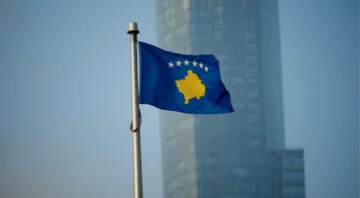
However, beyond the economic calculations and attempts to use this proposal as a political survival lifeboat, this initiative constitutes a stab in the back for Kosovo on the most vital fronts of state interest and national dignity. The greatest danger in the “realistic” proposal for functional integration is that it removes the only real pressure for Kosovo’s recognition, turning Chapter 35 from an essential condition into toilet paper. For Serbia, Chapter 35 of the EU negotiations is not simply homework; it is the “Achilles’ heel” and the only rope keeping Belgrade tied to the obligation to recognize the reality of Kosovo. This chapter is designed as a blocking mechanism. However, if Belgrade manages to “grab” the benefits of the single market, free movement, and billions in European funds through this “functional integration,” without being required to make any concessions on Kosovo’s statehood, then Chapter 35 is nullified de facto.
In this scenario, Kosovo’s recognition ceases to be a sine qua non (indispensable) condition and becomes an optional desire that Belgrade can postpone indefinitely. This is an act of outright diplomatic betrayal by Tirana: while “realism” is being invoked, in fact Kosovo is being stripped of the only weapon that compelled Serbia to sit at the table. By giving Serbia everything it wants (the economy) without asking for anything it finds painful (recognition and democratization), Tirana is turning European integration into an instrument that finances Serbian hegemony in the region, leaving Kosovo as a “geopolitical remnant,” waiting for the mercy of an unrepentant and incorrigible repeat aggressor.
It should be emphasized here that, even without this absurd proposal, Tirana’s officialdom’s fervent 13-year flirtation with Belgrade (while maintaining walls of ice with Pristina) has given and continues to give Serbia a de facto “certificate of innocence” in the eyes of the world. The message this close rapprochement with Belgrade conveys in international chancelleries is that Serbia can now claim it has no problem with Albanians (since it is “building” the Open Balkan with Albania), and that the only obstacle is the “stubbornness” of the government in Pristina. This strategy of Kosovo’s diplomatic isolation, paradoxically fueled by Tirana, seeks to frame the conflict not as an unresolved issue between two peoples, but as the political whim of a particular prime minister or government in Pristina.
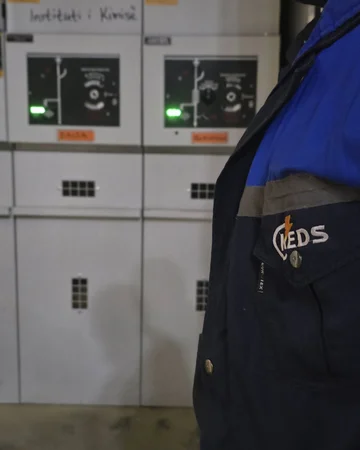
At this point, political hypocrisy reaches its peak. You cannot, on the one hand, have this organic bond of interests with Belgrade and, at the same time, express solidarity with the KLA leaders in The Hague. It is a glaring contradiction to lament a dubious and tendentious judicial process that was concocted, fueled, and maintained by Belgrade’s own structures, while rolling out the red carpet for the architects of that strategy. This new “realism” becomes even more cynical when one sees that, while common markets and regional Schengen are being discussed, Kosovo’s security is being directly undermined by the same Vučić. The attacks in Banjska and on the vital Ibër-Lepenc canal cannot be ignored here; they have now been proven to have been orchestrated by Serbian structures. How can there be “functional integration” in the region with a state that, on the one hand, promises to facilitate the movement of goods and, on the other, organizes paramilitary operations and sabotage of its neighbor’s critical infrastructure? This contradiction is not merely a technical obstacle, but evidence that Belgrade’s project does not aim for peace, but for Kosovo’s subjugation through a twofold isolation: diplomatic, through cooperation with Tirana, and physical, through destructive actions on the ground. Tirana’s dualism is no diplomacy at all, but an abandonment of principles that undermines Kosovo’s position at every negotiating table, leaving it alone to face a Serbia that reforms on paper but remains unchanged in its chauvinist project for the region.
In conclusion, this proposal for functional integration is not a creative solution to Brussels’s slowness, but a pragmatic pact that sacrifices the real democratic transformation of our countries in the name of the survival of hybrid elites. By selling this model as “the only realistic path,” the Rama-Vučić duo is seeking to legalize a status quo in which the market replaces the rule of law and the free movement of goods conceals the paralysis of mutual recognition. For Kosovo and our national interests, this is not merely an economic experiment, but a devastating blow to Chapter 35; a tool that frees Serbia from the obligation to recognize Kosovo, rewarding it with access to the European market while it continues to orchestrate destabilization. This project risks pinning the Balkans to a permanent grey mediocrity, an exploitable periphery where obligations to the EU are real, but decision-making power remains zero. This also brings us to the other problem of the democratic deficit, because countries will be obliged to implement European rules without having full decision-making rights, assuming obligations without proportional representation. Therefore, by abandoning the normative accession process in favor of ad hoc political deals, official Tirana is not only undermining Kosovo’s state dignity, but leaving the entire region exposed to geopolitical influences from the East. The Balkans does not need a market window that recycles autocracy, but an open door to liberal democracy. Any shortcut that bypasses justice, democracy, and mutual recognition does not lead West but East, and merely prolongs the agony of a region that is losing time, opportunities, talent, and its future in the name of false stability.