By Bajram Gecaj
In the summer of 1998, at the request of the then Prime Minister of the Republic of Kosovo, Dr. Bujar Bukoshi, I traveled to Albania with a clear mission: to visit, observe firsthand, gather facts, and report on the activities and operations of the FARK-KLA forces on Albanian territory. It was a journey laden with responsibility, but also with great expectations about what I would see and experience.
During this visit, I had the opportunity to visit the Ministry of Defense, as well as the barracks in Laprakë, Kukës, and Papaj in Bajram Curri. An extraordinary part of this mission was also my intensive conversation, lasting more than five hours, with the then Minister of Defense, Ahmet Krasniqi, and his Deputy Minister, Agim Mehmeti.
At the same time, in Tirana I also met many KLA soldiers who had temporarily withdrawn from the war zones, including soldier Petrit Haraqija, who carried with them the wounds, exhaustion, and pride of the battles they had just left behind.
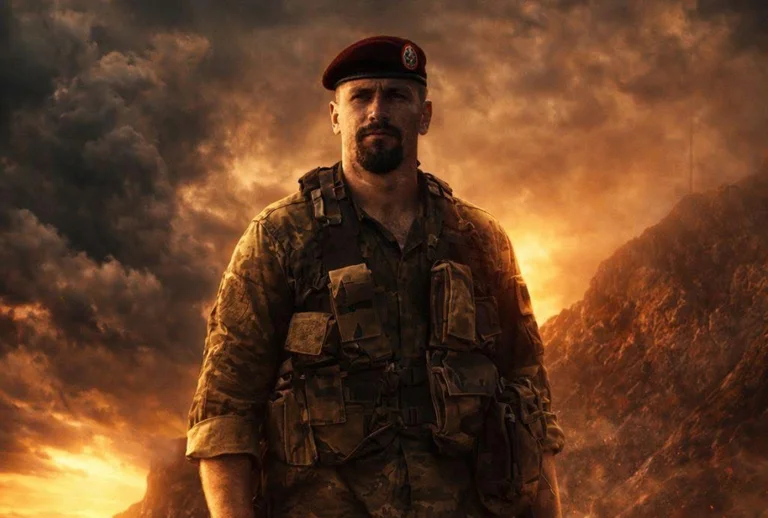
I want to dedicate this article in particular to Colonel Rashit Mustafa, widely known as Commander Karadaku, who commanded the “SKENDERBEU” Professional Guards Brigade, operating under the FARK-KLA.
This unit had been established with the aim of being the first to enter Kosovo, to pave the way and secure the entry of the other, larger unit in the autumn of 1998. The goal was to carry out the strategy prepared in advance by the Ministry of Defense for Kosovo’s liberation. However, following the assassination of Minister Ahmet Krasniqi, the project was abandoned.
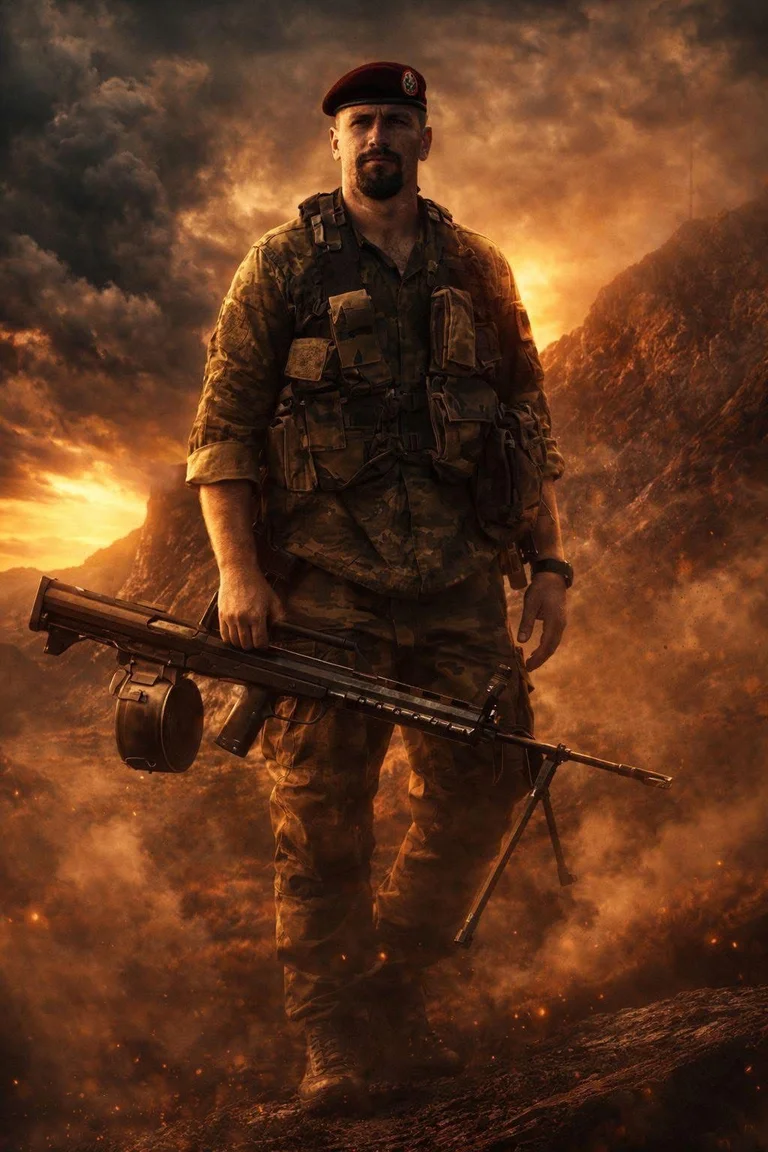
Commander Karadaku left a deep and unforgettable impression on me. His presence, calmness, determination, and the discipline of the unit he led stirred extraordinary emotions in me and made me understand the seriousness and dedication of those young men.
On that visit, I had traveled in Zeqir Shamolli’s (Zeqë’s) car. I had just met him in Tirana, but we later developed a strong and sincere friendship in a free Kosovo.
Commander Karadaku, like the other FARK-KLA officers I met in those days, expressed concern about the lack of sufficient support from the Government of Kosovo in exile, the obstacles coming from the other wing of the KLA, and the many difficulties they encountered with the structures of the then government in Tirana.
Commander Karadaku’s unit had undergone three months of intensive commando operations training in Kukës. They were strong, tall young men with an imposing appearance and exemplary military discipline, all ready and eager to face the Serbian military, police, and paramilitary forces in hand-to-hand combat.
At the end of the day, as in regular armies, they lowered the Albanian flag. I asked the Commander for permission for Zeqë and me to stand in line at the end of the soldiers’ ranks, and he approved. However, that moment stirred such strong emotions in me that I told Zeqë I would stay with their ranks. I even gave him clear instructions on how he should report in my place and whom he should inform about my decision to join the KLA ranks.
Commander Karadaku was firm and insistent that I should not stay. He told me that even if I did stay, there was no place for me in that unit, since his soldiers had already been trained as a special unit. He insisted that I return from where I had come and help with FARK-KLA logistics, because, as he told me, there were more people than equipment.
Sadly, Commander Karadaku’s body was found on June 28, 2005, near Gjakova, while it is suspected that he was killed on June 10, 1999. To this day, his death remains unclarified and an open wound for justice and our collective memory.
Glory to the life and work of Colonel Rashit Mustafa – Commander Karadaku.