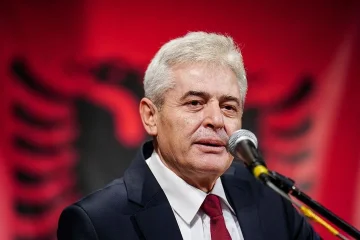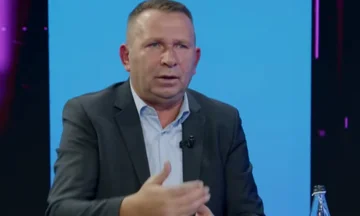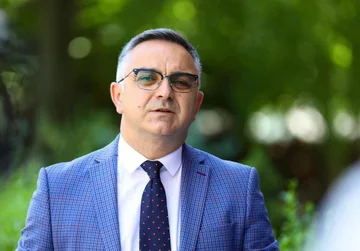
Jugosllav Gashiq, a candidate for Serbia’s Student List, says his list will not cooperate with the Serb List, which he describes as an extension of Aleksandar Vučić’s party. But on Kosovo’s status, he says the Student List will adhere to its program, which is based on Serbia’s Constitution.
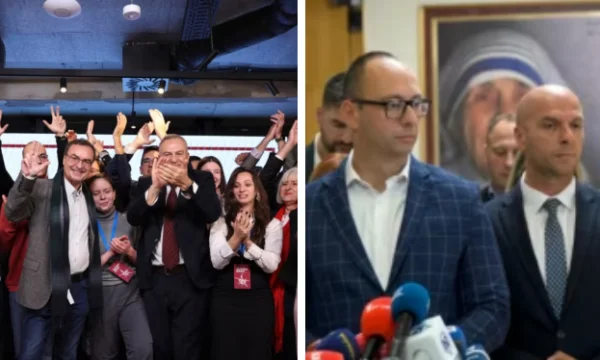
After the Student List’s victory in the parliamentary elections on October 25 in Serbia, a delegation from the list visited Gračanica and Dečani. Jugosllav Gashiq, a candidate on the list and a member of the delegation, said on Radio Television of Vojvodina’s “Pravi ugao” program that the visit was intended to show that the list would honor its campaign pledges on Kosovo.
“We will not give up what we have included in our program,” Gashiq said. Speaking about Kosovo, he referred to it as “our southern province.”
In the November 11 interview, Gashiq criticized the policy Belgrade had pursued over the past 14 years, accusing the previous government of weakening Serbia’s presence in Kosovo. However, when asked about Prime Minister Albin Kurti’s statement that Kosovo’s independence is a reality the new government in Belgrade must face, Gashiq returned to Serbia’s Constitution.
“Serbia’s Constitution is also a reality. We will simply shift the focus to Serbia’s Constitution,” he said.
This is where Gashiq’s stated position aligns with the line pursued by Vučić. The Student List promises a change in the way Belgrade operates in Kosovo, while continuing to refer to the Serbian Constitution regarding its status, which treats Kosovo as part of Serbia.
“The Serb List was created as an exponent of the SNS in Kosovo”
Gashiq was more blunt when asked whether the Student List would cooperate with the Serb List. He described it as a clientelist group and accused it of pressuring, blackmailing, and coercing voters.
“The Serb List was created as an exponent of the SNS in Kosovo,” he said, referring to Vučić’s Serbian Progressive Party.
Asked whether the Serb List’s presence in the Kosovo Assembly and local government makes communication necessary, Gashiq said that if the Student List needed to communicate, it would do so through the international community. He left open the possibility of cooperation at the local level between Serb List representatives and the new heads of institutions operating under the Serbian system. According to him, the leadership of these institutions would be replaced.
What it seeks in the dialogue on Kosovo
Gashiq said that in Gračanica the delegation met Metropolitan Teodosije, while at Dečani Monastery it held a conversation lasting around three hours with Father Sava Janjić. According to him, representatives of the Serbian Orthodox Church presented the delegation with concerns about the monastery’s operation and asked for support.
On the dialogue, Gashiq said the Student List aims to speak with the international community to preserve the operation of educational and healthcare institutions functioning under the Serbian system, as well as on issues related to the Serbian Orthodox Church.
When asked about Kurti’s demand that Belgrade give up its campaign against the international recognition of Kosovo, Gashiq referred to the Brussels Agreement. He claimed that Serbia had fulfilled all its obligations under the first agreement and that Pristina had done very little. The question of whether Belgrade would halt its campaign against recognition went unanswered directly.