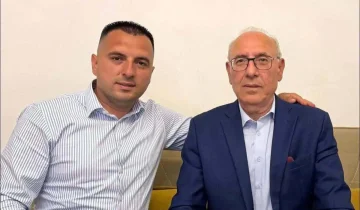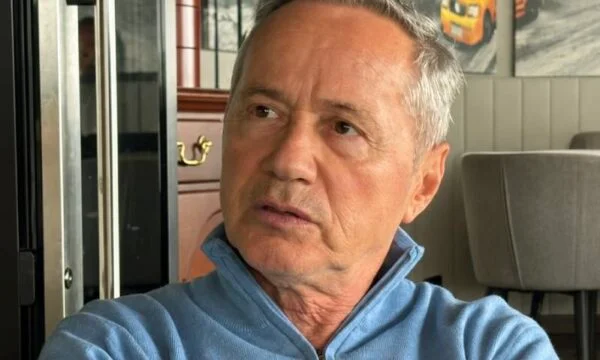
Xhevat Prekazi, one of the important footballers to emerge from Yugoslav football, has died at the age of 70.
The Kosovan Albanian, born on August 18, 1957, in Mitrovica, spoke in an interview with the Croatian outlet Index just a few days before he died.
There, Prekazi, a lifelong Yugoslav, as he describes himself, spoke about his return from Turkey to Belgrade in 1993, while wars had begun in the Balkans that would ultimately break up Yugoslavia. Asked how much the war and the breakup of Yugoslavia had affected him, Prekazi said: “A lot! It destroyed me, because I had worn the Yugoslav jersey. I would stand at attention and listen to my anthem, the most beautiful anthem in the world, to me. And not just once, but many times. Then you see what is happening to that country.”
After seeing what was happening on the news, Prekazi said he lost the desire to play football and decided to end his career.
“I told my wife: ‘Tomorrow we’re going to Belgrade. If not tomorrow, then the day after.’ What contract? What money? None of that mattered to me anymore. Jeca was a great support to me. In those bad times, people in mixed marriages didn’t have it easy, but we stayed together and survived it all,” he recalled.
Prekazi was asked whether making that decision had been difficult, given that he was Albanian and returning to Belgrade was not straightforward.
“No. I wasn’t afraid of that. Of course, all sorts of things were happening then. But I was well known, after all. On the other hand, I didn’t go around everywhere. I wasn’t playing anymore. I was with my wife, living my life,” he said.
Asked whether he avoided going out in the Serbian capital for safety reasons, Prekazi said he had always known who he was and where he came from.
“I went out, of course, but mostly during the day. If I went somewhere, I was careful about where I went. Not because I was afraid, but because you never know what kind of idiot you might run into. There are idiots everywhere. I didn’t want to think about it, but I had to be careful.”
“And, as I told you at the beginning of our conversation, I have always known who I am, what I am, where I come from and what surname I bear. That was my guide in life,” he said.
Prekazi was also asked about the war in Kosovo and his house in Mitrovica, which had been burned down.
“Yes, that happened then. My family told me after it was all over, and then I went there… I looked at that emptiness, what was left of the house. I knelt down and cried. Well, that’s life,” he said.
Prekazi also mentioned another visit to his birthplace in 2021 and explained his disappointment at how it had changed.
“I was in Mitrovica in 2021, too. I was with my brother; we were walking around the city and reached the stadium where Trepça played. We also went to the place where I used to train. There’s nothing left there anymore. The field where I started playing football no longer exists,” he said.
“And I said to my brother: ‘Imagine the Turks coming now to shoot a film about my life. Where would I take them? What would I show them?’ The city has lost what once made it special. Just like here, many things have changed,” he added.
He said all he found were memories.
“The friends I grew up with, many of them are no longer with us. I’m left with memories of everything that was beautiful, of the Ibër River. We spent all our days there, swimming. My neighbors, two brothers, had big bicycles. One of them was my best friend. Sometimes three or four of us would ride on one bicycle, and that’s how we went swimming,” he said.
“Some things we had, that we created and fought for, no longer exist. Above Mitrovica is the Partisan monument, which symbolizes the joint struggle of Albanians and Serbs, while now they have built a large church beside it. In the southern part of the city, on the site of the once-wonderful market, they have also built a gigantic mosque,” Prekazi added.