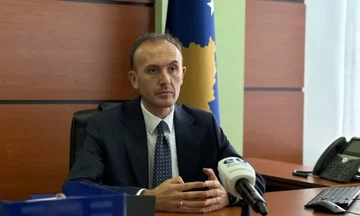
Prime Minister Albin Kurti has identified two main factors that, according to him, are influencing the migration of Kosovo citizens, both within the country and to other countries: the quality of education and problems in the justice system.
Speaking about this issue, Kurti said that during his six years in government he had become convinced that these are two of the main reasons driving citizens to leave their places of residence or Kosovo.
He stressed that, unlike in earlier periods, when migration was linked to Serbian occupation, political persecution and economic poverty, living conditions in municipalities and the quality of public services are now playing an important role in this phenomenon.
As the first factor, Kurti cited conditions in Kosovo’s municipalities, assessing that living conditions, particularly in rural areas, are prompting citizens to move to larger urban centers or abroad.
“I am convinced that in Kosovo, people live much better as citizens of the Republic than as residents of a municipality. Most of Kosovo’s municipalities have living conditions such that, especially in rural areas and especially because of the quality of education, people either migrate internally to Fushë Kosovë and Prishtina, or to Germany and Switzerland. Believe me, one of the main causes of migration, whether internal or abroad, is education,” Kurti said.
The prime minister acknowledged that education remains one of the biggest challenges facing Kosovo’s institutions, saying that it takes a long time for the results of investment in this sector to become apparent.
According to him, improving the quality of education requires stability and long-term investment, as the results of today’s reforms may only be seen after 10 to 15 years.
“I am also very optimistic that we will be able to fix industry, defense, security, investment, culture and sports. Education will remain a major challenge, because in education you have to sow this year and for the next two years in order to be able to reap the harvest after some 10–15 years. It is very slow. It requires great stability,” he said.
Kurti also criticized the way education is organized at the local level, saying he would prefer this sector to be more centralized.
He mentioned the decentralization of education under the Ahtisaari Package, because of the Serb-majority municipalities, and assessed that municipal education directors should have a greater role and more importance.
“I would have preferred education to be more centralized, I’m telling you very openly. But under Ahtisaari’s proposal, because of the 10 Serb-majority municipalities, education was decentralized. And just look at the quality of our staff who are municipal education directors across Kosovo’s 38 municipalities. Unless the municipal education director is made a much more important person, education will not be fixed,” Kurti said.
He added that differences in the quality of education are also visible between municipalities, noting that the situation is better in the capital than in other centers, while problems are more pronounced in rural areas.
In addition to education, Kurti singled out problems with the justice system as the second factor influencing citizens’ migration.
According to him, citizens who face injustices, unresolved complaints or lengthy court proceedings may lose faith in the country’s institutions and decide to leave with their families.
“We have many citizens in our country who, when they have gone to the Palace of Justice and come out again, or to the basic courts or prosecutors’ offices to lodge complaints, have left more dissatisfied than when they went in,” he said.
Kurti assessed that delays in court proceedings and facing injustice may be reasons why citizens no longer see their future in Kosovo.
“A problem with a neighbor, a problem at work, an injustice somewhere, a prolonged court proceeding—and they leave with their whole family. We need to fix justice and education. To be honest, I am optimistic about everything else. I am cautiously optimistic about these two. And this is our major challenge in the years ahead,” the prime minister said.