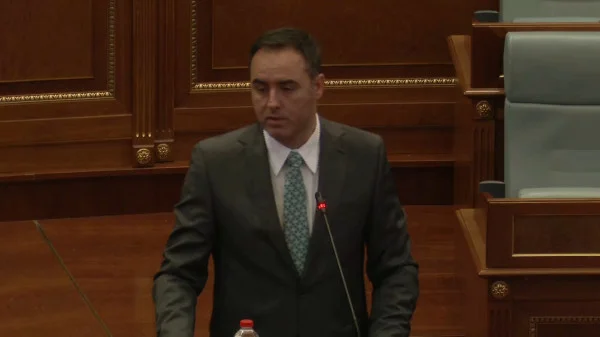
The country's Deputy Prime Minister, Glauk Konjufca, said on Wednesday that institutional instability had constrained the effectiveness of governance and delayed structural reforms.
Konjufca made these comments at an extraordinary session of the Kosovo Assembly, where the EU report on the country is being discussed.
“The report covers the period from September 2025 to 2026. During this period, we had three rounds of elections: two early parliamentary elections and one round of municipal elections. There was no elected president until October, and the Assembly was dysfunctional for most of the time. In the report, the Commission notes that during the reporting period, the Assembly worked only from mid-February until the end of April, while the Government was in a caretaker capacity for most of the time. Even during this period, there was a three-week interruption, from March 6 until the Constitutional Court's decision of March 25. According to the report, this constrained the effectiveness of governance and delayed structural reforms,” he said.
He said that the report showed that the level of preparedness had not declined in any area.
“Nevertheless, the overall picture shows that the level of preparedness had not declined in any area. In the fight against organized crime, the level of preparedness is said to have increased, and progress was assessed more favorably than last year in at least seven of the chapters,” Konjufca said.