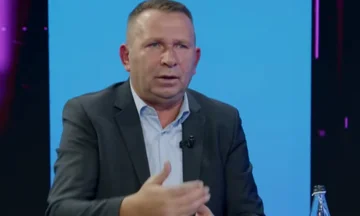
Former head of the Kosovo Chamber of Commerce, Safet Gërxhaliu, said Kosovo lost the energy battle in the first years after the war because investments in new generating capacity failed to materialize, making the country dependent on electricity imports.
Commenting on the Kosovo Government’s decision to ban electricity trading with Serbian companies, Gërxhaliu said this dependence limits the country’s ability to choose its sources of supply, while future generations will also bear the consequences of the lack of investment.
“It is true that Kosovo lost the energy battle at the very beginning of its freedom, around 2002–2003, when investments in new generating capacity failed, whether Kosovo e Re or other alternative sources. The fact that we are a country with more coal and had oriented ourselves towards alternative energy, yet only a very small number of kilowatts of electricity are produced today as a result of all these investments, has indeed made Kosovo dependent on imports,” Gërxhaliu said.
Gërxhaliu told Ekonomia Online that dependence on imports limits Kosovo’s ability to choose its sources of supply, especially at a time when other countries are also facing challenges in supplying electricity.
“In this regard, the very fact that you depend on imports means you have little opportunity to choose where you will get your supply from. Especially now, when not only the Western Balkans and Kosovo, but also Europe is facing, so to speak, a challenge in electricity supply, partly because of everything that is happening, whether the war between Russia and Ukraine or problems with oil, this is definitely a major loss that future generations will pay for,” he added.
He stressed that no time should be wasted looking for those responsible for the failure of energy projects, but that there should be greater transparency in electricity imports.