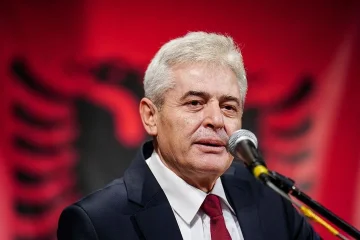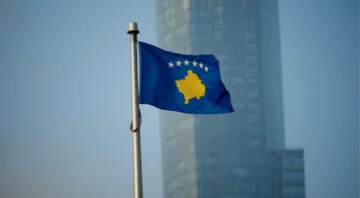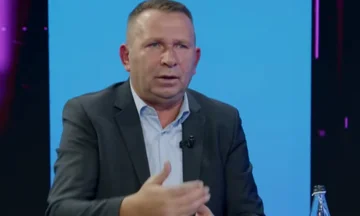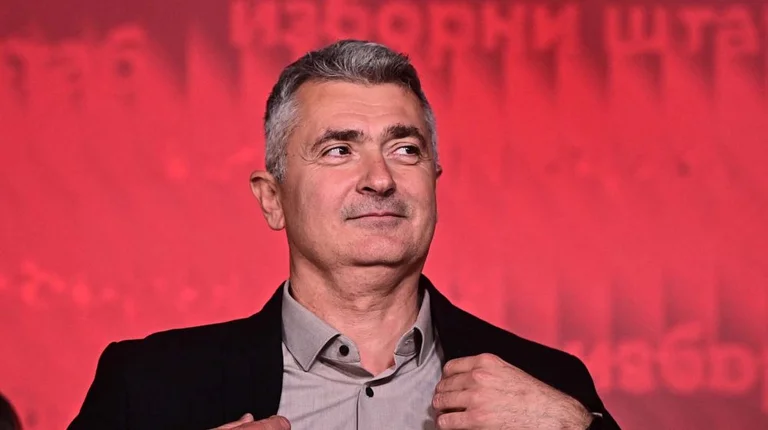
The Student List will continue the dialogue with Kosovo, which was conducted under the previous government. This also means implementing the Brussels Agreement on the normalisation of relations between Kosovo and Serbia, signed in 2013 with the mediation of the European Union, says Illija Srdanović, the top candidate on the list that won the early parliamentary elections on 25 October in Serbia.
In an interview with Radio Free Europe (RFE), Ilija Srdanović says the new government will respect the international agreements signed during Aleksandar Vučić’s rule.
This applies to political agreements, while contracts with foreign companies investing in Serbia will be respected “if they are in accordance with Serbia’s legal system and international acts.”
Srdanović also stresses that Serbia will continue the European integration process and that everything will be done to inform citizens about the benefits of membership in the European Union.
He reiterates his call to avoid any form of revanchism in Serbia, and says responsibility for the current security situation rests with the outgoing Government, which remains in office in a caretaker capacity.
Srdanović was the top candidate on the Student List, selected through decisions made by faculty plenums in Serbia. The strategy of this movement, which emerged from two years of protests against corruption and in support of the rule of law, was to organise without a single leader.
After its convincing victory over the forces of Aleksandar Vučić, who governed Serbia for 14 years, the question also arises as to who will be the Student List’s candidate for prime minister.
In his answers, Srdanović referred to Kosovo as “Kosovo and Metohija.”
Radio Free Europe: Mr Srdanović, how do you feel in the role of leader of a list that, in fact, has no leader?
Illija Srdanović: I feel proud. First and foremost, I am proud of all our citizens, who found in the Student List a way out of the situation we had been in for years in Serbia, exposed to the repressive system of an authoritarian regime, the previous government and a man who already belongs to political history but has left an indelible mark of emptiness on our history. He was in power for 15 years and continues to be present.
Radio Free Europe: The forces he led have lost only around 100,000 votes. He remains an important political force in Serbia. Are you aware that the problem, if we can call it that, has not been resolved?
Illija Srdanović: No, I cannot agree with you or with that assessment. In the conditions of a completely undemocratic society in which we live, where media freedom is entirely absent and Aleksandar Vučić’s regime had control over everything, winning half a million more votes means that, under normal circumstances and genuine democratic conditions, he would not get even 15 to 20 per cent of the vote. That is the real strength of the previous government.
Radio Free Europe: The forces that won the election face extremely major challenges. But let’s first turn to another issue. How will you respond to fears of political revenge? How will you respond to violence, and what have you done in this regard? The footage we have seen of the violent entry into Informer TV is disturbing. I believe you agree.
Illija Srdanović: I would agree on only one thing. The Student List “Students Win” bases its programme, plan and all its activities to date, including those of the student organisation, on the principles of the rule of law and respect for the Constitution and laws.
These principles will guide all our future actions as well.
None of us, including me personally, has ever called for any form of political revenge. We have called only for respect for order and the law.
In recent days, especially yesterday, many members of our list, including me, have called on citizens to see the electoral process through to the end peacefully and with dignity.
The events seen inside and around the pro-government media outlet Informer were not instigated, encouraged or supported by the Student List.
We support order and the law and want Serbia to function this way in the future.
Radio Free Europe: Can anyone guarantee that the violence will not happen again?
Illija Srdanović: At this moment, responsibility for any form of violence and for preventing it lies with the current government, which is serving in a caretaker capacity.
For our part, we call on all citizens of Serbia to refrain from any form of violence and to respect order and the law.
Once we officially take power, responsibility for developments in the country will also fall on us.
At present, we have the power to make appeals, while the power to put the system into operation still lies with the state apparatus, which remains under the direction of the previous government in a caretaker capacity.
Who will lead Serbia’s new Government?
Radio Free Europe: When will the public learn who the candidate for prime minister will be and who the candidates for ministers will be?
Illija Srdanović: At this moment, I can tell you that the Republic Electoral Commission has not yet announced the final results.
The final results will not differ from those published on the basis of a representative sample, or from the results of the ballots counted so far. Therefore, the number of seats will be more or less what we have at present.
However, the electoral process officially ends only when the Republic Electoral Commission announces the results in accordance with the law.
Only after that will the conditions be in place for the next stage: constituting the new Assembly, forming parliamentary bodies and then the process of forming the Government.
Radio Free Europe: Will the name of the candidate for prime minister be decided within the Student List, or will you once again consult the student forums at the faculties?
Illija Srdanović: The Government will be formed in accordance with the laws and regulations of the Republic of Serbia. The names, or appointments to Government posts, will be determined by the majority group of Student List MPs.
Radio Free Europe: Would you be willing to accept a possible nomination for prime minister? As the top candidate on the list, that seems somewhat logical.
Illija Srdanović: Yes, but at the beginning of our conversation you said this was a list without a leader.
We can say that, for every position, we will choose the candidate whom we jointly assess as best able to act in the interests of Serbia’s citizens.
European integration and relations with Russia
Radio Free Europe: There is great interest in the direction Serbia’s new government will take. So I’ll ask you some specific questions. The European Union: Will you continue on the path of European integration? Will you speed up this process?
Illija Srdanović: We remain on the path of European integration. Serbia committed to this process back in 2000, 26 years ago. This work will continue.
But what we can promise is that we will not repeat what the previous government did, which over 15 years lost 20 per cent of Serbian citizens’ support for European integration.
This is the final result of the previous government’s policies.
We will fully align our domestic policy with Chapters 23 and 24 of the negotiations with the European Union, drawing on shared European values, respect for rights and equality, the fight against corruption, the functioning of institutions and media freedom.
These chapters are the main obstacle to further progress in the European integration process.
Radio Free Europe: If there is one issue on which Europe is currently united, it is its position on Russia. The Student List has maintained that it will not impose sanctions on Russia. But something has to change. What will change in relations with Moscow?
Illija Srdanović: First of all, as I said earlier, the first condition and the biggest current obstacle to continuing European integration concerns Chapters 23 and 24, namely human rights and the rule of law.
Unfortunately, to date Serbia has not had the fundamental values of freedom, rights, democracy and media freedom. There has been no dialogue.
Our citizens do not have full information about what the European Union actually offers them. A large number of citizens, isolated within a media environment where they have been fed falsehoods for more than a decade and a half, cannot fully understand the European agenda either.
Many citizens are simply uninformed.
Radio Free Europe: Are you saying that, through dialogue, you will also reconsider Serbia’s position on Russia?
Illija Srdanović: There will certainly be dialogue within our society. All issues concerning international relations must be addressed through open dialogue with our citizens.
Policy cannot be determined by a single person.
We have sought and succeeded in ensuring that such a system of government, in which one person decides where we will go and in which direction we will move as a nation, is never repeated in Serbia.
We will open a dialogue and give citizens the opportunity to choose the direction they consider best for themselves.
But that dialogue must be open and transparent, not shaped by the regime, as has happened over the last 15 or 20 years.
Radio Free Europe: So, if I understand you correctly, the position on sanctions against Russia could be reconsidered?
Illija Srdanović: This could mean that Serbia’s citizens will decide on this issue.
Radio Free Europe: How? Through a referendum? Help me understand.
Illija Srdanović: In the same way as with relations with all other states.
Foreign policy should be shaped in accordance with the demands and will of the majority of citizens, not according to the opinion of one person or a very small group of people who make decisions on behalf of citizens.
That is not democracy.
Dialogue with Kosovo and the Brussels Agreement
Radio Free Europe: The Student List has taken a clear position on the issue of Kosovo. But will you continue the dialogue with Kosovo on normalising relations?
Illija Srdanović: Continuing the dialogue on the issue of Kosovo and Metohija is a fundamental part of the student plan.
The entire platform for Serbia’s domestic and international relations is based on respect for the Constitution of the Republic of Serbia.
Therefore, the platform for talks and the future of Kosovo and Metohija is also in accordance with the Constitution of the Republic of Serbia.
Radio Free Europe: So you remain committed to dialogue and the full implementation of the agreements?
Illija Srdanović: Absolutely. We remain open and leave room for open dialogue and for resolving issues, first and foremost in the interests of our citizens and everyone in the international community.
Radio Free Europe: Does this also mean fully implementing the Brussels Agreement?
Illija Srdanović: This means that we, as a society and as a responsible government, will respect internationally agreed protocols in the future.
All protocols that our officials have agreed to on behalf of Serbia may be reviewed to determine whether they are in accordance with the Constitution of the Republic of Serbia.
Radio Free Europe: Perhaps it is a difficult question, but does this also mean a willingness to speak directly with Albin Kurti, Kosovo’s prime minister?
Illija Srdanović: At this moment, we have not yet received the mandate and are not in power in Serbia.
We will make a decision later on every issue of great strategic importance to the state, the nation and our citizens, once the Government has been formed.
Radio Free Europe: Who will make the decision? Will you leave this matter to the judiciary? Will any proceedings be initiated—that is, will any decision be made regarding the request to extradite Milan Radoičić to Kosovo?
Illija Srdanović: At this moment, I cannot give you a decision, or even a personal position on this issue, because I am only one of the members of the list, which has not yet formed the Government.
But we will certainly seek to ensure that decisions on all such issues are made later, in accordance with the legal procedures in force in the Republic of Serbia.
Relations with Republika Srpska and the Srebrenica issue
Radio Free Europe: Has anyone from the circle of associates of Milorad Dodik in Bosnia and Herzegovina contacted you?
Illija Srdanović: No, no.
Radio Free Europe: What kind of cooperation do you expect?
Illija Srdanović: Continuing cooperation with Republika Srpska, in the interests of the citizens of Serbia and Republika Srpska.
Radio Free Europe: Will the new government encourage the authorities of Republika Srpska to resolve their problems with the central authorities of Bosnia and Herzegovina in Sarajevo?
Illija Srdanović: We will certainly help all citizens in the countries around us, and the issue of Republika Srpska is extremely important.
We will call for dialogue to take place openly and for the best common solutions to be found for all citizens of Bosnia and Herzegovina, including those of Republika Srpska.
Radio Free Europe: What position will you take on Srebrenica?
Illija Srdanović: The position on Srebrenica has been determined by the courts. There are also internationally recognised documents adopted by our Assembly in 2010.
Radio Free Europe: There is also an international document of a higher standing. We are referring to the ruling of the International Court of Justice, which determined that the crime in Srebrenica was genocide.
Illija Srdanović: Look, I would not put issues of this kind, which were not part of the elections and the electoral process in Serbia at all, in the spotlight.
We cannot assign responsibility for events 40 years ago to someone who was born after 2000.
The young people of Serbia, born after 2000, called for change because of Serbia’s domestic problems.
They asked us, the list of 250 candidates, to help them in this process.
We helped our young people bring down a repressive and autocratic government, led by an autocrat who was one of the main promoters of many of the issues you are now discussing with me.
None of the members of our list is responsible for the events of the 1990s. The previous government is.
Our future generation, born after 2000, wants to see what Serbia will look like in the future.
We will leave the events of the past to historians to make the final assessment.
The courts have already issued decisions and the judgments exist. Let historians address important historical issues in the future.
Serbia’s future lies ahead of us, and that is where we want to focus.
Contracts with foreign investors and Chinese projects
Radio Free Europe: Will you make public in the future all secret contracts, or closed contracts, that have enabled major projects in Serbia to be carried out with foreign investors? This has been one of the pillars of your anti-corruption campaign. Can we expect Serbia’s citizens to see, in the future, the contracts for the “Belgrade Waterfront” project, Chinese investments and other projects?
Illija Srdanović: We will certainly seek transparency for all such projects in the future, first and foremost for major infrastructure projects that are under construction or will be carried out in the future.
The infrastructure projects you mentioned have contributed greatly to citizens’ dissatisfaction and revolt.
We will seek full access to all relevant documents and contracts, so that we can assess which parts of them have been in accordance with the laws and regulations of the Republic of Serbia.
Only in this way can we make a final assessment of what has been done.
At present, we do not have access to the documents that have been signed; we do not know how these agreements were concluded or whose interests they served.
Once we have full access, we will be able to give you a precise answer.
Radio Free Europe: Will the Belgrade Fair be demolished?
Illija Srdanović: At this moment, I do not have a mandate to answer such a question, because this project, like many other activities, has been shrouded in mystery and a lack of transparency by the previous government.
Radio Free Europe: Why did I mention the Belgrade Fair? Because it is part of the contract signed with the investor building the “Belgrade Waterfront” project.
International agreements are international agreements. But these very contracts have been one of the main reasons for criticism of the now former government.
Nevertheless, these agreements must continue to be respected, mustn’t they?
Illija Srdanović: Contracts must be respected if they are in accordance with our legal system and acts of international law.
I am a doctor, not an expert in international law, so I cannot give you a precise answer on this issue.
But there will be responsible people and experts in this field on our list and in our future Government who will be able to give you a more precise answer than I can.
I do not want to play the judge, especially in a field that is not my speciality.
Freedom of expression and public broadcasters
Radio Free Europe: Will the entry bans into Serbia be lifted for a considerable number of people, activists and cultural workers who, under extraordinary circumstances, have faced such bans over the last two or three years?
Illija Srdanović: First, Serbia will be a country where there is freedom of thought.
We will never again allow people to be labelled because of something they have said and, for that reason, be denied the right to a dignified life in this country.
If that is the answer you are looking for, I believe I have given it to you in the most appropriate way.
Radio Free Europe: We saw what happened at Radio-Television of Vojvodina. You are in Novi Sad. The managers of this broadcaster apologised for their editorial policy. What do you expect to happen at Radio-Television of Serbia?
Illija Srdanović: I must say that such an apology is not enough to convince us that editorial policy will be fair in the future and in accordance with the best interests of all Serbian citizens.
An environment must be created in which there is continuous control and oversight of the work, first and foremost, of the public broadcaster.
In this regard, the Regulatory Body for Electronic Media has a key role to play and must begin carrying out its work in accordance with the law.
This means oversight of public electronic media, which, unfortunately, has been lacking over the last 15 years.
Radio Free Europe: Will a lustration law be passed?
Illija Srdanović: The lustration law is included in the student programme and will probably be one of the laws adopted by the Serbian Assembly in the coming period.