By: Petrit Selimi
In the last 4–5 years, Kosovo’s relations with the US have reached their lowest point in its modern history. How can the next government usher in a new era of active and strategic dialogue?
This article was published on Wednesday on the Substack publishing platform in English, but given today’s decision by the US government to suspend strategic relations with Kosovo, it has unfortunately become even more topical.
- 1) The US is Kosovo’s “indispensable partner,” but a partner whose advice we have chosen to ignore.
For decades, Kosovo has been connected to the US through deep political ties that began in the 1980s, during the final years of the former Yugoslavia, and then culminated between 1998 and 2008, when the US was both Kosovo’s savior from the Serbian regime’s genocidal aims and the guarantor of Kosovo’s freedom and independence through the Ahtisaari process, which brought the country sovereignty and independence. It is no coincidence that Pristina’s “George W. Bush” Boulevard is connected to “Bill Clinton” Boulevard, which intersects with “Senator Bob Dole” Street and leads toward “Madeleine Albright” Square.
In the following years, bilateral dialogue between a newly independent Kosovo and the US shifted from matters of physical survival to more structured and strategic relations, taking shape in four distinct areas:
- – Diplomatic cooperation was deep and successful, enabling Kosovo to be recognized by other states and to join institutions such as the IMF and the World Bank, as well as the Olympic Committee. Diplomatic communication was intensive at every level, from high-level visits to the White House to daily contact with the US Embassy and Kosovo’s Office at the State Department — on issues ranging from US efforts on Kosovo’s behalf in the Caribbean, South America or West Africa, to securing votes for membership in the EBRD or obtaining a SWIFT banking code for Kosovo.
- – Economic cooperation began to flourish, enabling major corporations such as Bechtel to take part in building Kosovo’s main highways, the launch of negotiations with an American company to build a new power plant, and Kosovo’s inclusion in the programs of the US federal agency Millennium Challenge Corporation, thereby opening the way for hundreds of millions in potential investment in the energy sector. The private sector began to play its part, with Kosovo companies increasing exports to the US, while American companies began transferring digital services to Kosovo.
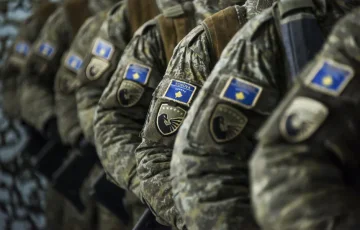
- – Defense and intelligence cooperation was built on a solid foundation. The US helped establish a modern intelligence service in Kosovo and draft and implement a strategy to transform the civil defense corps into a genuine military defense force. Many joint operations were carried out to tackle global challenges such as the rise of Islamic extremism and terrorism, as well as to counter Russian influence. For example, the role of Kosovo’s intelligence service in preventing an attack on Israel’s national football team in neighboring Albania was highly praised in the US in 2016.
- – Following the ICJ advisory opinion on the legality of Kosovo’s Declaration of Independence and the subsequent UNGA resolution to launch the normalization dialogue between Kosovo and Serbia, the US played a fundamental role in achieving both the First Brussels Agreement and the Washington Agreement. Kosovo and the US coordinated closely on every aspect — especially on preserving the Ahtisaari framework and the Constitution, while enabling the integration of the Serbian minority.
Under former Prime Minister Kurti, Kosovo has drastically reduced its relations with the United States, leading to unprecedented tensions between Kosovo and two successive US administrations. Senior American diplomats in Washington and the region began to question Kosovo’s willingness to remain a genuine partner. Our diplomatic presence in the US began to shrink, both because of concrete steps (such as the deliberate downgrading by the government in Pristina of the influence of Kosovo’s Embassy in Washington) and because of outright lies and broken promises to American interlocutors, from diplomats in Pristina to the Director of the CIA and visiting US senators. Kosovo is now experiencing its worst relations with the United States in its modern history.
- 2) A new approach, new actors, everything new.
The US government has repeatedly stated its national interest in our region: a peaceful Kosovo and Balkans, integrated into the European and Atlantic community. This frequently reiterated American national interest is implemented through various processes and instruments: from bilateral development assistance to support for dialogue, and increased economic and military cooperation.
But this requires a responsible and responsive partner in Kosovo: one capable not only of restoring relations to their previous level, but also of expanding them into new areas such as the energy sector, artificial intelligence, cybersecurity, green technologies and regional infrastructure, creating a deeper, future-oriented partnership that serves both sides. Our serious political investments in preserving Kosovo’s current constitutional framework, including the obligations successive Kosovo governments have undertaken toward the Serbian minority, are essential to paving the way for proactive US engagement on Kosovo’s behalf.
It is difficult to imagine this positive development under outgoing Prime Minister Kurti’s leadership. He has other plans — focused on dismantling Ahtisaari’s legacy and shaping the “Third Republic” — and he has been clear, consistent and categorical in his approach to these aims. His actions have also focused on reducing the role the US plays in Kosovo, as he considers this influence harmful to his political vision.
The only question is whether Kosovo’s political parties will find the will and strength to restore relations with the US, which will require political repositioning within Kosovo itself.
This requires courage, a quality conspicuously lacking among the new generation of opposition politicians. Nevertheless, courage must be found. Kosovo must simultaneously take domestic steps to create stability and progress, and implement measures, projects and processes that have value in the new American political landscape, where memories of 1999 or 2008 are fading, but where new opportunities may emerge to strengthen the partnership with a truly indispensable ally.
The author is a non-resident Fellow at the Center for Public Diplomacy at the University of Southern California and a former foreign minister of Kosovo. The original article in English was published on September 10.