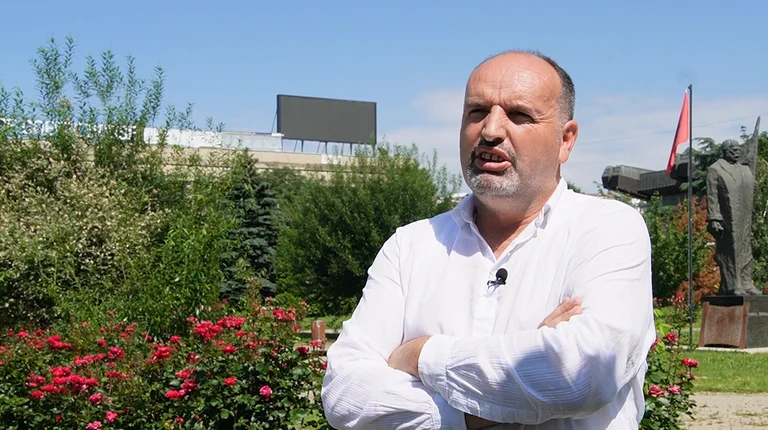
Written by: Sami Behrami
The term recession is used more broadly in the field of economics, where it refers to a contraction in a country's economic cycle, when there is an overall decline in economic activity caused by various factors and usually manifested as a crisis. However, it is also used in other sciences, where trends in phenomena are contracting toward a possible crisis.
Although the term recession is not widely used in demography, the general global trends (especially in developed countries and most developing countries), including Kosovo, nevertheless indicate that they have entered a “demographic recession”—demographic contraction with real prospects of a demographic crisis. As regards demographic developments globally and in Kosovo, the most accurate description of the situation would be the conclusion of demographers Bricker and Ibbitson, who in their study “The Shock of Global Population Decline” concluded: “We are not facing the challenge of a population bomb, but of the shrinking of the human population.”
This conclusion is also supported by the fact that around 60% of the world's countries have a total fertility rate below 2.1 children per woman (the rate needed for simple population replacement—maintaining the same population size), including the two most populous countries, India and China. In Kosovo's case, this is also borne out by the 2024 population census data, from which three main conclusions can be drawn: in the period 2011–2024 (the period between the two population censuses), Kosovo is shrinking, emptying out, and aging.
Viewed in the context of historical demographic development, Kosovo's demographic boom ended in the 1980s and early 1990s; it experienced demographic stagnation in the first decade of the 21st century, while in the second decade of this century Kosovo experienced a phase of demographic recession, rapidly approaching a demographic crisis. Fortunately, compared with all the countries of the Western Balkans, and even Southeastern Europe, Kosovo is still characterized by positive natural growth (the number of births is higher than the number of deaths, although the difference between the two natural-growth components is continually shrinking), thereby mitigating the effects of the demographic recession/crisis caused primarily by the very high flow of emigration.
Emigration in the first quarter of the 21st century represents the most unfavorable waves of emigration Kosovo has experienced to date. This trend is unfolding amid declining fertility, falling natural growth, a tendency toward a decrease in the total population, and an accelerated distortion of the population structure, especially its age structure, toward population aging. In addition to the overall scale of emigration, it is particularly concerning that emigration during this period has taken on a family character (entire families are leaving), whether as families or through family reunification.
Unfortunately, Kosovo's institutions have done very little to address the factors driving emigration, such as economic development, unemployment and insecure employment for young people, prospects for a better, safer and more dignified life, and resolving housing issues, especially for young couples, etc. Thus, although Kosovo has experienced economic growth since independence, such growth was unsustainable and insufficient to address the economic problems that were also the main drivers of emigration, thereby affecting demographic development and causing, first and foremost, a decline in the total population and a significantly lower level of fertility.
Moreover, the consequences of emigration are manifested in every aspect of life: a) demographic (population size, through the loss of that part of the population which represents development potential; birth rates, natural population growth, and population structures—demographic, economic, social, ethnic, etc.—accompanied by natural depopulation, brain drain, population aging, etc.); b) socioeconomic (low GDP growth per capita, slowing economic growth, loss of the workforce, reduced competitiveness and a negative impact on the social and pension systems, emigration of qualified people, etc.); c) national security (in the 21st century, the concept of “security” has changed considerably and is no longer equated solely with military security, but also includes other forms, such as demographic, economic, ecological, political and other kinds of security); d) the education system (a decrease in the number of pupils and students at all levels of education), etc.
The 2024 population census data also confirmed that Kosovo has entered a deep demographic recession with the hallmarks of a demographic crisis. Compared with the 2011 population census, it showed a trend of population contraction, depopulation and aging. Total population—during the period between the two censuses alone, Kosovo's total population showed a tendency to decrease by around 10%, which, figuratively speaking, means that during this period (2011–2024), Kosovo lost as many residents as the combined population of three relatively large municipalities—Mitrovica, Vushtrri and Skenderaj.
In the period between the two population censuses, 2011–2024, depopulation was present in almost all municipalities and areas of the Republic of Kosovo. This is best supported by the fact that, of Kosovo's 38 municipalities, 76.3% (29) are characterized by a decline in population, while only 23.7% (9) have experienced population growth, of which 8% (3) can be categorized as municipalities with population stagnation, meaning they have very low growth. In four municipalities (very small in terms of population), growth may have resulted from greater inclusion of communities in the 2024 population census.
Population aging—because of its extensive scale and rapid spread, the 21st century will be a century of older people, with intensive aging trends. This process has not been recorded before in human history, and therefore many experts in demography have declared the 21st century the century of population aging. Kosovo is also facing the phenomenon of demographic aging. This is best demonstrated by the increase in the average age of the population, which was around 29 years in 2011 and reached around 35 years in 2024. This increase in the population's average age, as well as other indicators, shows that Kosovo's demographic aging, caused primarily by mass emigration, falling fertility and also increasing life expectancy, will fundamentally change how we live, work and build our future.
The very rapid decline in natural growth and selective emigration (people aged 20–39 account for nearly half of emigrants) have accelerated the population-aging process. Thus, while in 2011 those aged over 60 accounted for 9.6% of the population, in 2024 their share rose to 16.1%. At the same time, the 0–19 age group showed a decline in its share, from 38.1% to 29.7%. The fact that Kosovo's population is aging is also demonstrated by population trends by age group in the period 2011–2024: the younger 0–19 age group declined by 25.9%, the 20–59 age group declined by 5.2%, while only the over-60 age group increased, by 49.7% (nearly doubling).
Emigration—although emigration statistics may be considered incomplete due to the particularities of data collection, even these incomplete figures indicate a very high emigration rate from Kosovo in the period between the two population censuses. Thus, between 2011 and 2023, more than 370,000 residents emigrated abroad. The worrying scale of emigration is also demonstrated by the fact that, over the 12-year period, an average of around 31,000 residents left Kosovo each year.
In other words, between 2011 and 2023, Kosovo lost each year through emigration a population equivalent to that of a municipality the size of Istog or Klinë; put even more simply, in 2021 and 2022 an average of around 119 people left Kosovo every day, or one person every 12 minutes. Even more concerning is that, according to various studies conducted in the country, around 60% of respondents expressed a desire to leave Kosovo, primarily younger generations aged 20 to 40, who account for around half of the emigrants and make up the main demographic and fertility, labor and security cohorts, etc., causing a decline in “human capital,” the principal driver of socioeconomic development.
The situation created by emigration, which has plunged Kosovo into a demographic and socioeconomic crisis, is best described by a postulate of Nobel Prize-winning economist (2001) George Akerlof: “The more people leave a country, the less attractive it becomes for others to stay”; or by the popular saying, “The fig tree sees the fig tree, and ripens!”
Finally, although for years (at least a decade and a half) we have raised our voices about the consequences of unfavorable demographic developments in the country and noted that the country is facing the loss of its most important resource—its people, or human capital—the scale of the problem and the consequences of these developments are still not understood by decision-making institutions, since actions and policies to resolve demographic problems and achieve sustainable demographic development in the country are lacking. Such development would also mean sustainable development in other aspects of life in Kosovo, apart from a few symbolic measures taken in recent years. The need to increase awareness and commitment to the demographic recession and crisis, and to take urgent measures and policies to “bring these developments under control,” is all the more urgent because a demographic recession and crisis have even greater consequences than an economic recession or crisis itself; demographic developments must therefore be an absolute priority.
Although human society today, including Kosovo's, is experiencing difficult economic and geopolitical times, addressing demographic challenges should be the most important priority for our civilization, not only for the coming years but also for the decades ahead. Measures and policies must be introduced immediately and urgently, before the demographic recession and crisis assume serious proportions and become a critical factor in Kosovo's overall development in the years to come. These measures can be numerous, ranging from creating conditions and prospects for a better life, especially for young people, to taxation, education and housing policies, etc.
Through the demographic developments between the last two censuses, Kosovo has passed through the demographic recession phase and entered the first phase of a demographic crisis—a phenomenon that should not leave any scientific or political institution in the country indifferent. Otherwise, an inadequate approach to demographic developments, the lack of sound population policies, etc., means that demographic developments will pose a major challenge for the population, economic, education, social and security policies, etc., in Kosovo in the near future.
The author holds a doctorate in geography and demography