By: Artan Behrami
The political crisis in Kosovo has been artificially kept alive by the Vetëvendosje Movement to obscure normality—their greatest enemy. A party that rejects dialogue, depolarization, agreement and compromise. Kosovo, more than ever before, needs internal dialogue to heal hatred, division and, above all, the risk of becoming a failed state.
This Albanian and Western value was overturned on the day the Vetëvendosje Movement came to power—the day dialogue and compromise became synonymous with national treason.
In trying to be different from Hashim Thaçi, Albin Kurti has begun to resemble Aleksandar Vučić. The antithesis of this historic figure of Kosovo can only be someone who represents Serbian political doctrine.
And, unfortunately, over the past five years Kosovo has been governed by such a mindset. The deterioration of relations with the United States of America; European Union sanctions; damaged relations with the West; political campaigns with coffins and the dead; pseudo-nationalist politics as opium to dull sensitivity to domestic failures; regional and international isolation; accepting agreements at diplomatic tables and destroying them on the ground; victimization, spreading lies, creating parallel realities, celebrating losses—all these are not Albanian values rooted in our political culture.
This is Serbian doctrine! Kosovo needs to restore the values of a winner, to return to Western political doctrine, cooperation and dialogue among its people. It needs to return to the Western orientation that liberated it, made it independent and equal to other states.
What is needed are statesmen who lead by the principles of a winner, not a loser. With determination, not victimization. In a spirit of cooperation, not revenge. With a shared vision, not hatred. Kosovo needs statesmen who set aside their egos to make way for the state’s lasting progress. Statesmen who, even in the most difficult situations of their lives, manage to inspire hope and motivate others.
A few nights ago, the citizens of Kosovo witnessed that statesmen like Hashim Thaçi know how to offer hope and inspire even when physically imprisoned. Meanwhile, they witnessed the populist demagogue Albin Kurti, imprisoned in primitive and kamikaze worldviews, spreading fear, gloom and stagnation. This is the difference between a statesman and a destroyer of institutions. But the real challenge is to prevent Kosovo from becoming a failed state. The Republic of Kosovo, more than ever before, needs to establish an institution that protects the Constitution from groups that do not accept the constitutional order—but also from individuals who violate the Constitutional Court’s decisions.
An institution mandated to monitor both political parties and individuals or radical groups that do not recognize or challenge the constitutional order of the Republic of Kosovo. Once, Kosovo’s Constitution, institutions and state were defended against external enemies. Today, they are threatened by a party that has not changed its anti-state agenda, even after coming to power. Today Kosovo is forced to defend itself against a man to whom this state has given everything, while he has given Kosovo nothing. And this can happen only through Kosovo’s institutions.
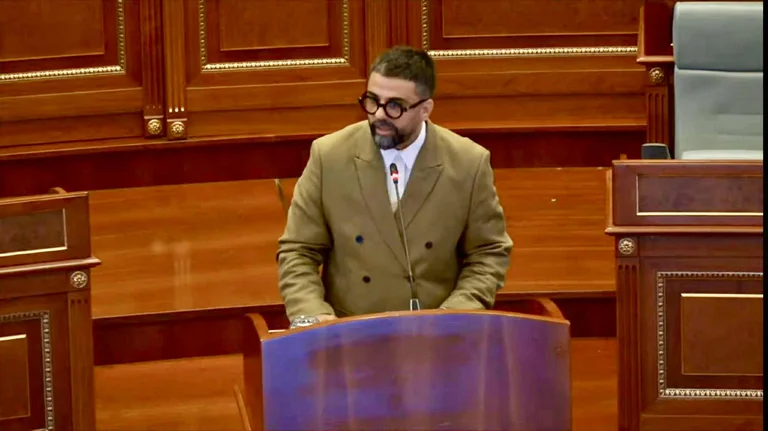
Not through political violence. Not through false causes. Not through kamikaze politics. Trust lies in the institutions built through great sacrifice. Therefore, it is important that the Constitutional Court’s future judgments be clearer and more direct, leaving no room for misinterpretation by those who use trickery as a political strategy. Excerpts from the speech in the Assembly of Kosovo that, due to lack of time, was not read!