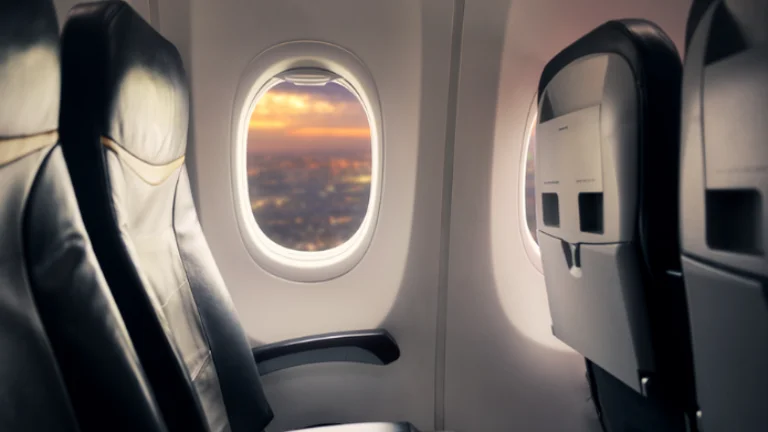
Most passengers have a favorite seat when flying. Some like to sit by the window to enjoy the view, while others choose an aisle seat for more room to move around.
But for those who feel nervous when flying, choosing a seat is very important and can significantly affect their experience.
To help passengers choose the ideal seat, The Wedding Travel Company has teamed up with Jane Hawkes, a former British Airways flight attendant and travel expert.
She has shared some valuable tips on which seats to choose—and which to avoid—especially if you are sensitive to turbulence or suffer from motion sickness during flights.
The best seats on a plane
According to Jane, the most comfortable seats are in the front rows, next to the cabin divider (bulkhead). These seats have several advantages:
No passengers in front of you who could recline their seats and encroach on your space.
More legroom, making them comfortable for long flights.
You are among the first to be served food and drinks.
You can board and get off the plane more quickly.
The bumps are milder at the front of the plane.
Seats to avoid
According to the expert, you should avoid sitting at the back of the plane for several reasons:
You experience more turbulence, as the rear moves around more, like the back of a bus.
Proximity to the toilets can mean unpleasant smells during the journey.
Worse for people who suffer from motion sickness, because they feel more movement.
For this reason, if you feel nervous when flying or are sensitive to bumps, choose a seat as close as possible to the front of the plane.
Pay attention to hygiene
Regardless of where you sit, Jane recommends always carrying hand sanitizer and wet wipes in your carry-on bag. Planes are not thoroughly cleaned after every flight—only when they go in for maintenance—so it is a good idea to disinfect the tray table, seat belt, and the areas you touch.