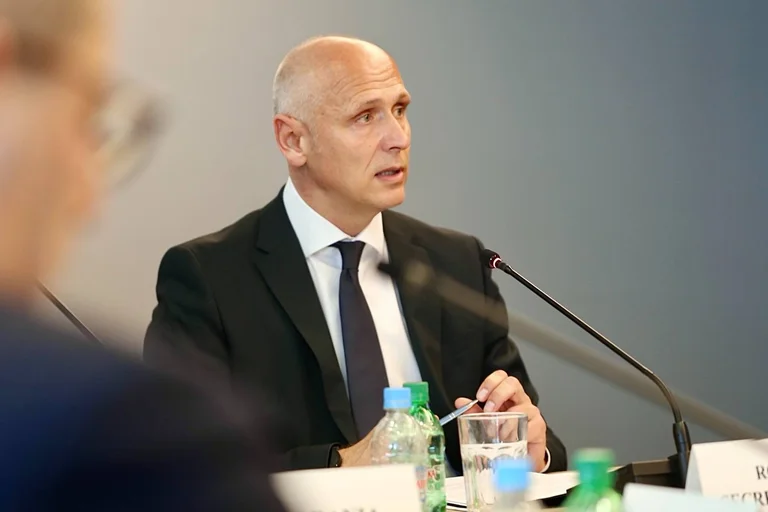
Opinion by RCC Secretary General Amer Kapetanović on the occasion of International Workers’ Day
Every year, May 1 invites us to pause for a moment, reflect and honour the global workforce—billions of people whose efforts fuel our economies and shape the societies in which we live. International Workers’ Day is not merely a date on the calendar; it is an enduring call for justice, dignity and fair treatment in the workplace.
The well-known principle of “eight hours for work, eight hours for rest and eight hours for what we will” established more than a century ago, was a revolutionary step towards a fairer distribution of time and work.
But today, as the world of work undergoes profound change driven by digitalisation, the green transition and artificial intelligence, this balance is being shaken. Remote work is blurring the boundaries between professional and personal time, artificial intelligence is challenging traditional work roles, and green economies are demanding new skills and structures. In this context, the fundamental ideas of justice at work, such as workers’ rights and decent working conditions, may no longer be enough. They may need to be reviewed and adapted to remain relevant in a world where how, where and why we work are constantly being rewritten. As wise people would advise, “we must never tire of defending the dignity of work.”
This sums up the true essence of May 1, a day that represents not merely employment and economic production, but the fundamental dignity of every working person. But dignity at work does not live in words alone. It lives or dies in policies, in practice and in everyday experience. And it is precisely here that the Western Balkans finds itself at a crossroads. While impressive economic indicators suggest progress, they also conceal deep and persistent inequalities. The question we must ask is not simply how many people are employed, but under what conditions, with what prospects and at what cost to the region’s long-term well-being?
Yes, there has been progress. The employment rate in the Western Balkans has reached historic levels—56.5% in 2023, compared with 50.4% just three years earlier. Unemployment has also fallen to record lows, averaging 12%, down from 16.6% in 2020. But behind these figures lie deep structural challenges: persistent informality, limited access to quality jobs, a shrinking and ageing workforce, an ongoing outflow of talent, mismatches between skills and labour market demands, and fragmented approaches to labour mobility and migration. All of these threaten to stall progress and further deepen existing inequalities. Brain drain is real, and it is accelerating.
Since June 2024, Germany has doubled work visa quotas for Western Balkan economies, enabling an additional 50,000 citizens to work legally in Germany. While this has opened up opportunities for individuals, it has deepened labour shortages in our countries. According to the latest Balkan Barometer survey, businesses across the region cite a shortage of workers and the ongoing loss of talent as their biggest challenges. Skills mismatches compound the problem further.
Many young people complete formal education only to discover that their qualifications do not match the real needs of the market. Outdated curricula and a lack of practical training create a deep gap between education and employment, contributing to high youth unemployment and driving further emigration. In response, governments across the region have begun to review immigration policies, with the aim of attracting foreign workers to fill the gaps. The number of work permits for migrant workers has more than doubled over the past five years, from 46,000 in 2018 to over 100,000 in 2023. But policy is not enough.
Without proper implementation, alignment with EU integration objectives and strong protections for domestic and foreign workers, these efforts risk remaining short-term solutions. Ensuring fair wages, safe conditions and genuine career opportunities is not only a matter of economic strategy. Above all, it is a matter of protecting human dignity in the face of rapid change. As artificial intelligence transforms entire industries and borders become increasingly easier to cross, we must protect the human core of work.
This May 1, let us reaffirm our commitment to a future in which everyone, regardless of background or passport, has access to decent and rewarding work. Not as a privilege, but as a fundamental right. A right worth defending—today, tomorrow and always.