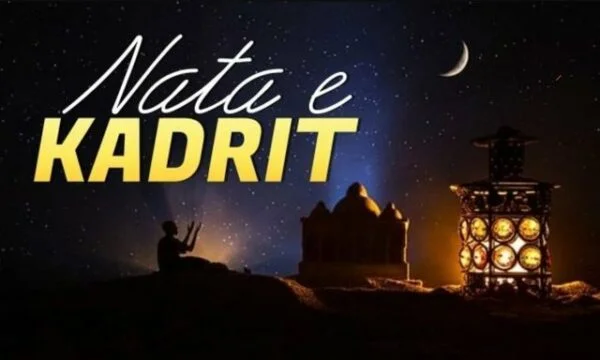
Laylat al-Qadr is considered the holiest night of the year for Muslims and, according to the Islamic faith, fasting on this day is considered equivalent to a thousand months. For this reason, the number of people fasting today is much greater than the number who fast during the month of Ramadan.
But why is Laylat al-Qadr considered equivalent to a person's lifetime, that is, a thousand months?
Laylat al-Qadr marks the descent of the Quran to earth and the beginning of the writing of the holy book. According to clerics, fasting and praying to God on this day determine a person's fate and life over the course of a year. It is thought that thousands of people, not only Muslim believers, fast on Laylat al-Qadr.
By the permission of their Lord, angels and the Spirit (Gabriel) descend on Laylat al-Qadr for every matter. It (what God ordains) is peace until the break of dawn. Muslims believe that the Quran was revealed to Muhammad by Allah on Laylat al-Qadr. The revelation began in the Cave of Hira in Mecca. The first surah to be revealed was Surah Al-Alaq.
Signs of Laylat al-Qadr
This very great night has its signs, which are only noticed after the new day has dawned. Among these signs is that the sun on the day following Laylat al-Qadr rises without rays, or appears red with a dim light.
Another sign that is mentioned is the light rain that may fall on Laylat al-Qadr, the wind, and that the night is clear, neither hot nor cold.
What should a Muslim do on Laylat al-Qadr?
Make as many duas (supplications) as possible.
Make tawbah and istighfar (repent for sins and ask the Almighty God for mercy).
Increase tasbih (remembering and glorifying Allah) and expressions of gratitude.
Send blessings upon the Prophet (peace be upon him).
Give as much sadaqah (charity) as possible.
Guard against sins committed by the limbs (hands, feet, eyes, ears, etc.).
Do not miss prayers in congregation (that is, pray as much as possible in the mosque).