By: Hafiz Gagica
The war in Ukraine has shaken the foundations of European security and brought staggering losses in human lives, with hundreds of billions of euros poured by EU countries and the United States into military, economic and humanitarian support.
Meanwhile, the Ukrainian people have paid the heaviest price: the loss of thousands of lives, the destruction of cities, mass deportations and the annexation of strategic territories that may never be returned. In the face of this protracted tragedy, which has devastated lives and a state, it became clear that Kyiv’s leadership, headed by President Volodymyr Zelensky, failed to win the war. It remained trapped between defensive rhetoric and ruthless realpolitik.
The Russian aggressor must also be viewed in this context.
Ukraine is facing a Russia led by the despot Vladimir Putin—a ruler who has decided to remain at the head of a dictatorial and repressive regime until death. He knows no language other than violence and aggression. Under his leadership, thousands of innocent civilians—children, women and elderly people—have lost their lives, victims of an unjust war aimed at subjugating a neighboring state. Putin understands only force, and only the United States and the allies of the democratic world can show him that force.
Zelensky, meanwhile, having come from the world of acting and comedy, failed to completely break away from that style, even when he took the helm of the state during the most difficult period in modern Ukrainian history. Precisely when Ukraine needed wisdom, prudence and a long-term strategy, its president often behaved as if he were rehearsing for a film—with symbolism, emotional video messages and gestures designed for an audience, but not necessarily for the state.
At his first meetings in the White House, at European summits and in international addresses, he tried to keep Ukraine at the center of global attention, but failed to understand that perception cannot replace political reality.
Europe, for its part, proved unprepared and immature: it supported Ukraine without requiring it to hold regular elections and without ensuring that Kyiv had a legitimate new institutional direction. This was a repeated mistake, similar to the EU’s earlier experiences in Bosnia after Dayton, when investment in leaders without institutional backing produced uncertainty and disappointment.
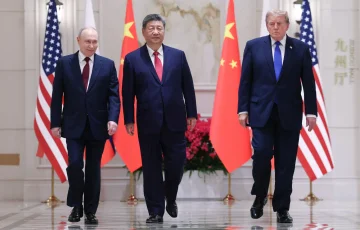
The United States, meanwhile—particularly under President Trump’s administration—had made clear from the outset that peace is not won through illusions, but by accepting the reality on the ground. This has been a constant principle of American diplomacy, from Dayton in 1995 to the latest agreements in the Middle East: facts determine agreements, not wishes. Ukraine did not accept this lesson. Instead of seeking an agreement in the early stages of the war, it relied on the idea that unconditional Western support and the image of a symbolic president would be enough to overturn Russia’s advantage. Reality showed the opposite.
Europe too now sees clearly that it entered a contest it could not win. The countries that supported Ukraine unconditionally—especially those that gave in to Zelensky’s emotionally charged media narrative—are now realizing that without the American plan and direct US–Russia negotiations, there was never any real way out. Therefore, Washington’s new plan is expected to bring a painful chapter to a close, but also to serve as a valuable lesson for the new generations of European politicians.
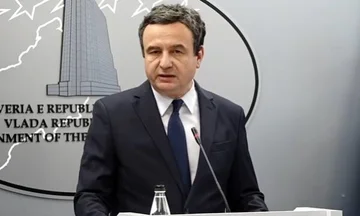
Kosovo’s position should also be viewed against this backdrop.
Without an in-depth analysis or a clear strategy of diplomatic reciprocity, official Pristina chose to support Zelensky unconditionally—even though Ukraine has never recognized Kosovo’s independence and has given no indication of willingness to do so. This thoughtless enthusiasm is an example of how emotions and political impulses can supplant the national interest; a mistake that small countries must never allow themselves to make. Kosovo’s diplomacy must be based on reciprocity, or else it risks expending energy where there is no genuine reciprocity.
The American plan is bringing the actors back down to earth. It is proof that politics is not a film set; it is the art of responsibility and prudence, especially in wartime. It is a warning to leaders who think they can build states with videos, emotional rhetoric and political acting. It is a reminder to small countries like Kosovo that statehood is sustained through stable alliances, pragmatism and vision—as was the case with its own journey to freedom and independence, with the support of our strategic friend: the United States of America.
Today, as the reality created in Ukraine is being accepted by all sides, Europe has paid dearly and gained nothing, and the United States is restoring its diplomatic weight, it is the right moment for Kosovo to learn from this development as well.
A state is preserved through vision, not improvisation.
Freedom is preserved with allies, not rhetoric.
And true politics requires prudence, not acting.
Hafiz Gagica
Stuttgart, 22.11.2025