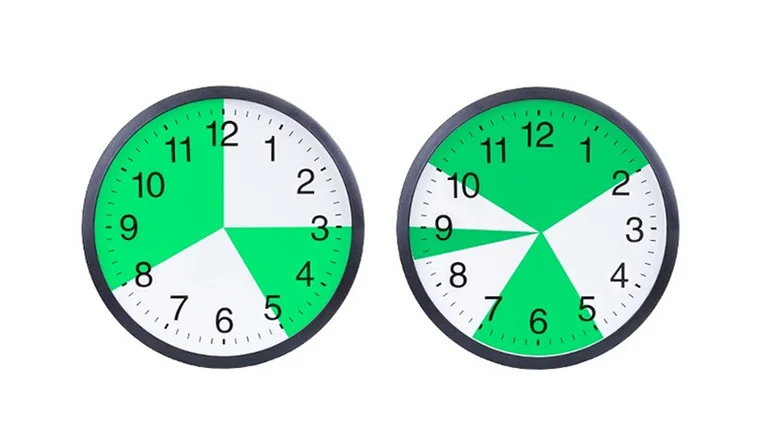
Sleep consisting of several phases is often associated with one of the most ingenious names in the world of art and the Renaissance-era inventor, Leonardo da Vinci
He wanted to make the most of his time for work and spend as little as possible sleeping.
His plan involved “dividing” the normal period of nighttime rest into several parts – that is, into multiple phases, which led to the practice of sleeping several times during the day.
You can skip this ad in 5
Advertisement
Da Vinci thus slept for 15 minutes every four hours. As a result, he slept for only an hour and a half a day.
He began using the time he had saved on rest for creative work.
Da Vinci said that he had used this method for many years of his life and had never felt tired.
It is known that, under physiological conditions, the most productive time for work and creativity follows a period of sleep. This is when a person's capacity for work is particularly high.
Interrupting a period of wakefulness every four hours with a short rest leads to an increase in work capacity, which is a direct consequence of this kind of rest, Telegrafi reports.

Years of practice and experimentation by those who have followed Da Vinci's example have led the Bright Side website to select some of the most effective variations of polyphasic sleep:
– 30 minutes of sleep every 6 hours (the dymaxion method);
– 20 minutes of sleep every 4 hours (the uberman method);
– 1.5–3 hours of sleep at night and then three 20-minute naps during the day (the everyman method);
– 2 hours of sleep at night and a 20-minute nap in the afternoon (the tesla method). 5 hours of sleep at night and 1.5 hours in the afternoon (the siesta method).
However, keep in mind that every body is different, and different types of polyphasic sleep may not be suitable for everyone.
Experts warn that if you plan to switch to this kind of rest schedule, do not drive a car or make important decisions until you are absolutely sure that the lack of sleep is not having any effect.
It can be said that this kind of schedule makes sense during any period when you have a lot of work, but not continuously.
Sleep is very valuable for our brain and body, and even one sleepless night cannot be made up for.