While leg pain during menstruation may be caused by a condition such as endometriosis, chemicals called prostaglandins, which are responsible for regular period cramps, may also play a role, as can dehydration, nutritional deficiencies or hormone imbalances
Below, the underlying causes of leg pain during your period are examined in more detail, offering some areas to focus on when it comes to managing this symptom.
1. Excess prostaglandins
Prostaglandins are most likely the main cause if you experience leg pain as a result of menstrual cramps, which can very often occur around the time your periods are heaviest.
Prostaglandins are chemicals released by the lining of the uterus. They are responsible for breaking down the uterine lining, which then gives you what you know as your period.
These prostaglandins work by causing the uterus to contract and then relax, and this cycle of tightening and expanding can contribute to pain.
These prostaglandins are also quite inflammatory by nature, which can cause inflammation around the uterus; from there, this pain can spread to other parts of the body.
For many women who experience diarrhea around the time they are also having severe abdominal cramps, this may also be the result of prostaglandins traveling to and irritating the colon.
Remember, the uterus is very close to the colon, but these prostaglandins can also spread a little farther, and women may experience cramping pain in their upper thighs and legs as well.
Interestingly, to help counteract this process, research suggests that some anti-inflammatory supplements may help. Vitamin D and omega-3, in particular, are among these, as they are especially anti-inflammatory and may specifically help with menstrual pain.
2. Joint pain
It may also help to try to determine the type of pain you may be experiencing, as well as where it is located in your body.
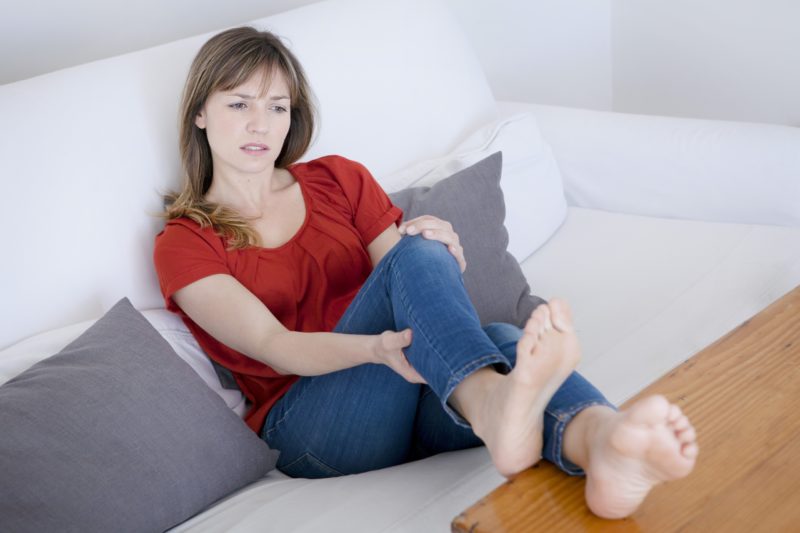
Women may also experience joint pain around the time of their period, perhaps around the hips, given again that the hips are close to the uterus.
However, it is also important to consider any other underlying issues and how these may flare up as a result of hormonal changes during this time. So, if someone already suffers from osteoarthritis or rheumatoid arthritis, they may notice symptoms related to these conditions flaring up at this point in the month.
Estrogen is very good at helping keep our muscles and joints well lubricated. Therefore, as estrogen levels fall, this can often cause our symptoms to flare up; as our joints become dehydrated, they can easily become more sensitive to discomfort.
This scenario is also very common during menopause as estrogen levels fluctuate; but then our monthly period is almost like a mini menopause, so this makes sense! We experience a drop in estrogen levels, which can ultimately worsen underlying conditions or weaknesses.
However, this drop in estrogen that we experience along with our period is a natural occurrence and part of a normal monthly cycle. So, what can you do if you find that you suffer as a result? First, it is important to prioritize hydration.
Hydration is absolutely important and can help to offset the drop in estrogen somewhat and therefore preserve some of its protective, hydrating functions.
3. Muscle pain
If you experience monthly pain or discomfort, you may notice it in your joints or muscles. Interestingly, these prostaglandins directly affect your muscles in and around the uterus. But, as before, prostaglandins can easily spread to the surrounding areas. Therefore, the pain you feel in your thighs may be muscle pain, reports Anabel.
In this situation, hydration is obviously very important, but the nutrient magnesium should also be prioritized.